
Introduction
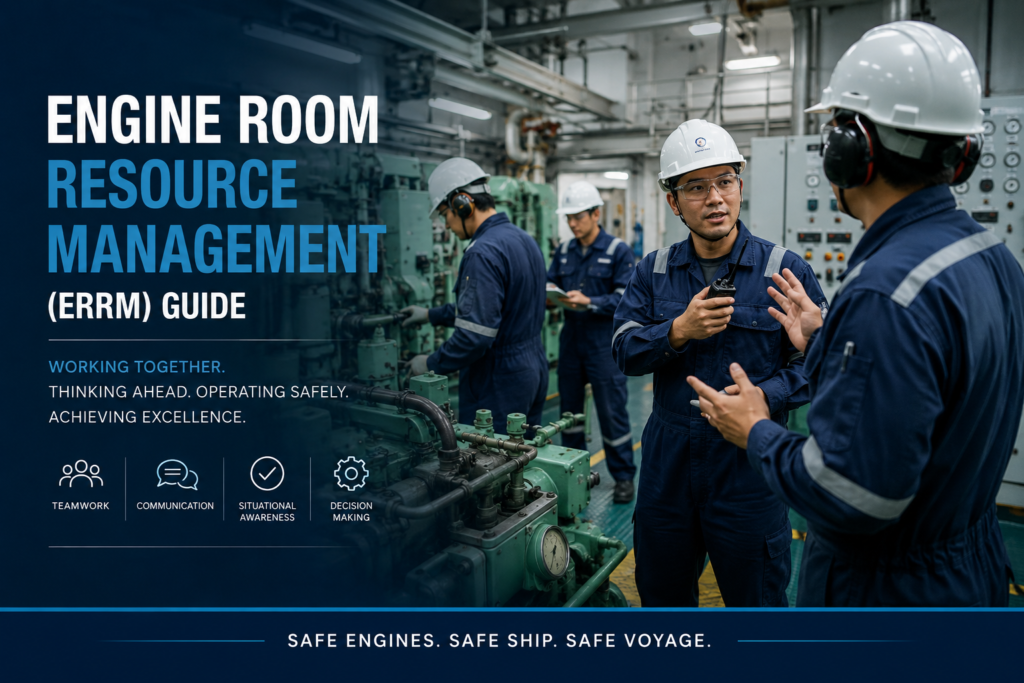
The engine room is considered the heart of any vessel as it ensures propulsion, navigation, maintenance of systems and operation of cargo facilities. However, all advanced technologies require a well-trained crew to function properly. This is when engine room resource management proves to be important.
Engine Room Resource Management (ERRM) is not just about engineers’ skills and knowledge. It is more about communication, decision-making, workload, alarms, and coordination of actions. Proper application of ERRM may help reduce errors, increase the reliability of machinery and build a culture of safety onboard.
ERRM becomes especially important due to the nature of this high-risk working environment where any small miscalculation may result in fire, flooding, contamination, malfunctioning of machinery or loss of propulsion.
What is Engine Room Resource Management?
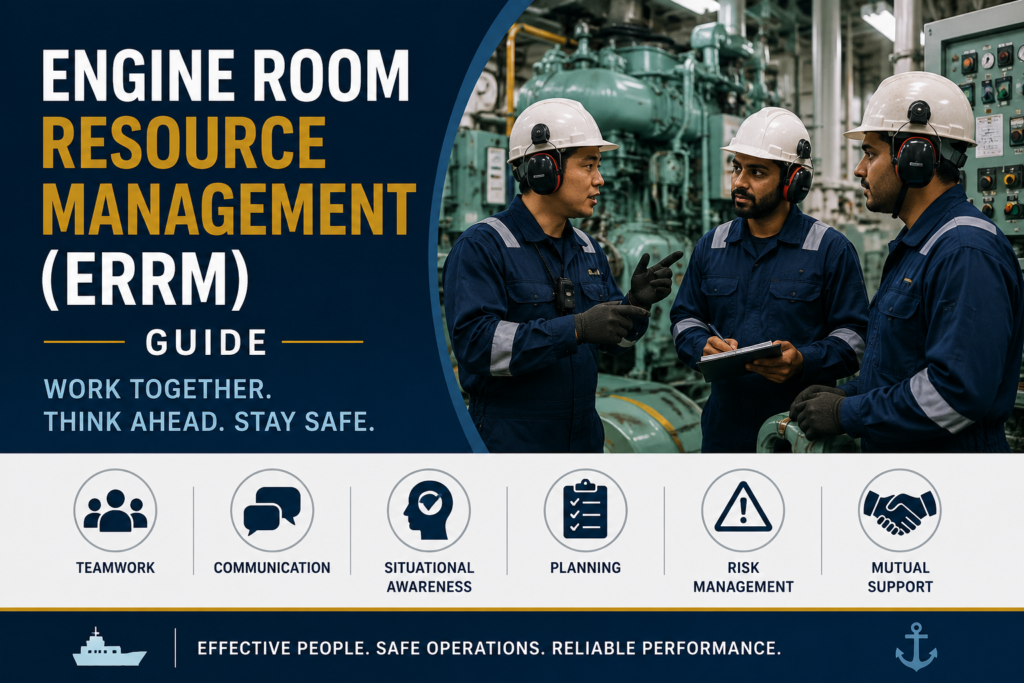
Engine Room Resource Management (ERRM) is an organized method of managing people, information, equipment, time and communication within the engine room of a ship.
The reason for having such management is to make sure that the engineers and the crew on the engine room can work safely in complicated operations, emergencies, maintenances, and even watch keeping.
ERRM has similarities with Bridge Resource Management (BRM), but it is specifically related to engineering operations. ERRM ensures that there will be no mistakes due to poor communication, fatigue, unclear division of responsibility, hurry, and overconfidence.
This training is recognized by the International Maritime Organization through their Engine-Room Resource Management Model Course 7.17.
The Importance of Resource Management for Engineers
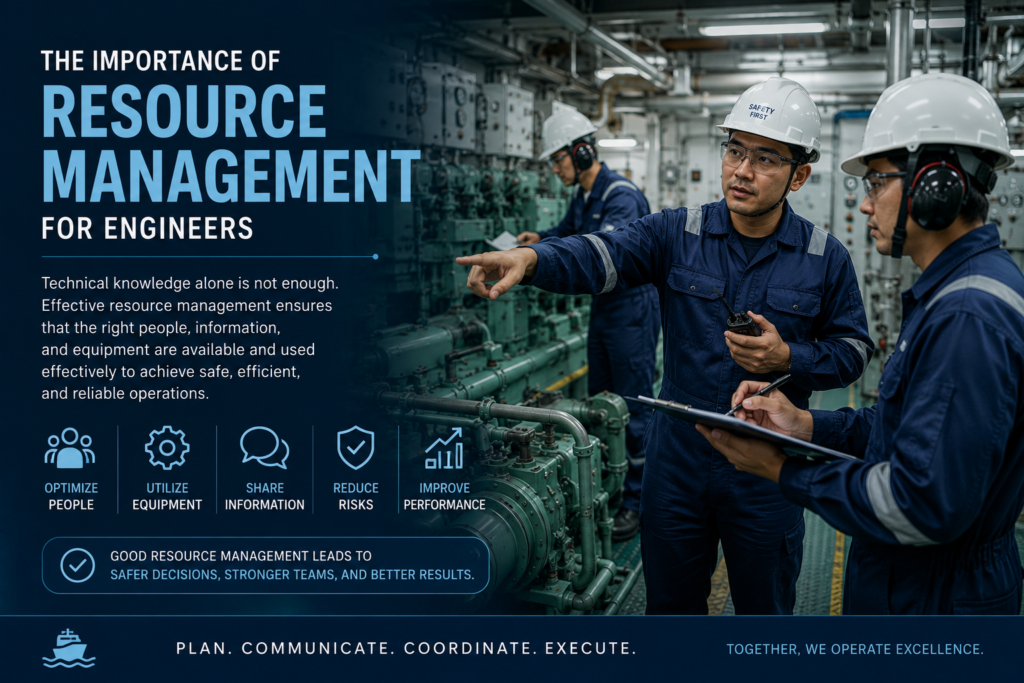
Ships nowadays become more and more technologically equipped. Modern engineers use automated control systems, electronics to monitor the equipment, various types of alarms, systems of managing fuel, environmental control systems, and complicated propulsion systems.
But modern advanced technologies do not exclude human risk factors from the picture. In many cases, advanced technologies introduce new human risk factors.
For instance, an engineer can get several alarms during maneuvers at once. In case of poor communication and misprioritization of tasks, the team can act too late or take incorrect decisions.
According to the 2024 review of maritime safety literature, errors committed by crew members caused 65.8% of all accidents analyzed by the European Maritime Safety Agency.
Main Concepts of Engine Room Resource Management
There are several concepts that form the base for successful implementation of engine room resource management practices.
1.Communication
One of the main factors of ERRM is communication.
The team that operates the engine room works under noisy and hot conditions. It is very easy to misunderstand the instructions when they are provided in a hurry, in a wrong way or without any confirmation.
Good communication means:
- Providing clear instructions
- Repeating the information if needed
- Using closed loop communication
- Confirming that the instructions were understood
- Reporting any abnormal situations right away
- Not making any assumptions
For instance, when the chief engineer instructs the officer to start the standby generator, he/she will need to repeat the order and report back about its completion.
2.Situational Awareness
Situational awareness refers to knowledge of the current situation in the engine room, potential future occurrences, and how this situation can impact the vessel.
A situational aware engineer does not just concentrate on one pump, one valve, or one alarm but considers the big picture.
This involves the observation of:
- Machinery running conditions
- Fuel and lubricant level
- Temperatures of cooling water
- Alarm trends
- Weather conditions
- Maneuvering condition of the ship
- Tasks being performed by other crew members
- Emergency preparation
For example, when the vessel enters the port, engineers should know that there is a possibility of high stress on machinery due to the frequency of speed change. Even minor problems related to air pressure, cooling, or lubrication can turn into big issues while maneuvering.
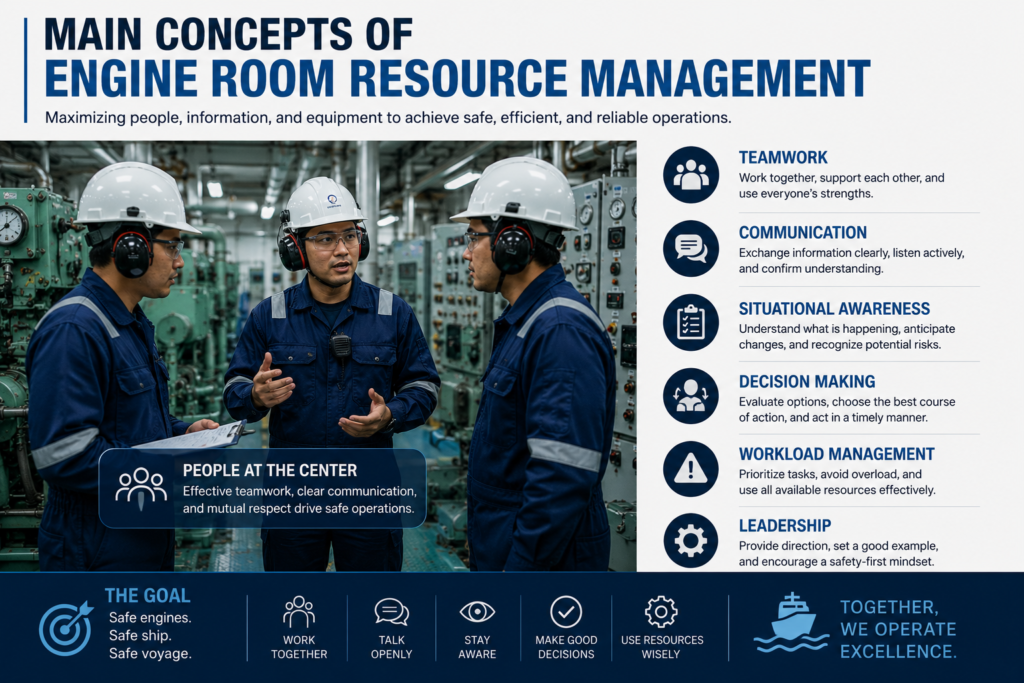
3.Leadership and Teamwork
Good leadership should not imply that everything is being done by one individual. Instead, good leadership consists of delegation, reporting, and ensuring that each team member knows his duties.
Good chief engineer ensures that junior engineers and ratings can freely discuss safety matters with him.
This is important because junior crew members might spot some problem sooner than more experienced senior officers do, and if they are hesitant to report the problem, a minor problem will eventually turn into a big one.
Effective teamwork involves:
- Valuing all roles of crew members
- Informing each other during watch changes
- Helping less experienced engineers
- Questioning and clarifying things
- Not having blame-oriented safety culture
- Regular drills and debriefing
4.Improvements in Engine Room Safety Resulting from ERRM
ERRM leads to safer engine rooms by decreasing the chances of human error.
Crews trained in ERRM are more likely to recognize hazards, adhere to proper procedures, and stay calm when dealing with emergencies.
Improved Emergencies Management
Emergencies in the engine room may arise fast and call for prompt actions. These may include fires, flooding, power outage, boiler malfunction, and fuel leakage.
ERRM training teaches crew members to act as a team instead of reacting individually.
In case of an engine room fire, for instance, crew members need to:
- Activate the alarm system
- Alert the bridge
- Shut down ventilation if necessary
- Cut off fuel sources
- Account for crew members
- Prepare firefighting systems
- Use the vessel’s emergency plan
Lack of organization and communication means that important time is lost.
As the International Chamber of Shipping states, the engine room is a complex environment with a high risk of errors. The engine room procedures guide highlights the importance of procedures and checklists for safe work.
5.Improved Maintenance Quality
Maintenance errors can cause machinery damage, unexpected breakdowns, and operational delays.
With strong engine room resource management, maintenance work becomes more organized. Team members discuss the task before starting, identify hazards, confirm isolation procedures, and verify the system after completion.
This approach is particularly useful for jobs involving:
- Fuel systems
- Electrical panels
- Boilers
- Main engine components
- Pumps and compressors
- Steering gear systems
- High-pressure lines
6.Practical Ways to Improve Engine Room Resource Management
Shipping companies and onboard engineering teams can strengthen ERRM through regular training and practical habits.
Use Pre-Task Briefings
Before starting major maintenance or operational work, hold a short briefing.
The briefing should cover:
- The purpose of the task
- Potential hazards
- Required personal protective equipment
- Isolation and lockout procedures
- Individual responsibilities
- Emergency actions
- Communication methods
A five-minute briefing can prevent a costly accident.
7.Improve Watch Handover Procedures
Poor watch handovers are a common source of mistakes. The relieving engineer must receive complete information about machinery condition, ongoing work, alarms, defects, and operational plans.
A proper handover should include:
- Current machinery status
- Equipment under maintenance
- Open permits
- Alarm conditions
- Fuel transfer operations
- Bilge and ballast status
- Instructions from the chief engineer
- Upcoming maneuvering or port operations
/engine-room-watchkeeping-best-practices/
8.Perform Practical Drills
Drills must not be taken as just paper exercises. Communication, leadership, decision making, and emergency coordination must all be tested.
The engine room drills that will help you to perform include:
- Main Engine Failure during Maneuvering
- Generator Blackout
- Fire in Engine Room
- Fuel Oil Leakage
- Flooding in Machinery Space
- Boiler Failure
- Steering Gear Failure
Every drill should end up with a quick discussion about what happened and what can be done better.
10.Technology and ERRM: The Perfect Combination
Technology could help in engine room resource management, but it cannot substitute human reasoning.
Technology provides real-time information about engine performance, consumption, vibration, temperature, pressure, and emission level. It makes it possible for the engineers to spot any issue immediately.
However, it is essential that the engineers interpret the data correctly.
If there is an increase in bearing temperature according to the sensor, the team will have to choose from reducing the load, checking lubrication, preparing standby engines, and informing the bridge. Here, ERRM comes into play.
The perfect solution is the combination of technology with people, processes, and communication.
FAQs
1.What does engine room resource management mean?
Engine room resource management is a safety and team concept employed by the engineering staff onboard ships to coordinate their personnel, equipment, communication, workload, and decision making in the engine room. The primary objective of this concept is minimizing human error and ensuring safe vessel operation.
2.Why is engine room resource management necessary?
Engine room resource management is necessary because most marine accidents have human factors that underlie them including ineffective communication, fatigue, role confusion, or bad decisions. ERRM makes the work of engineers coordinated and allows for fast response in emergencies and efficient maintenance of ship machinery.
3.What are the key aspects of engine room resource management?
The key aspects of engine room resource management are effective communication, situational awareness, leadership, teamwork, workload control, decision-making, emergency management, and proper watch handing procedures.
4.Who should be trained in engine room resource management?
Engine room resource management training is particularly essential for chief engineer, second engineer, third engineer, fourth engineer, electro-technical officer, engine cadet, motorman, and engine rating. All personnel in the engine department will find ERRM useful since engine room safety requires teamwork at all levels.
5.How does ERRM minimize human error?
ERRM minimizes human error through promoting clear communication among engineers, following procedures, using checklists, verifying instructions, and reporting any abnormality at an early stage.
6.What are some real-life instances of ERRM in practice?
Real-life instances of engine room resource management are having a briefing before the fuel oil changeover, clarifying orders during maneuvering, task allocation in case of generator blackout, informing the chief engineer about abnormal machinery readings, carrying out a checklist before any significant maintenance, and conducting thorough watch change prior to relief from watch.
7.How does ERRM enhance ship performance?
ERRM enhances ship performance through reduced machine downtime, avoidance of maintenance errors, improved fuel management, quicker response in an emergency situation, and better collaboration between engine room and bridge crews. The effective operation and efficient communication of engineers will contribute to the safe and reliable performance of the ship.