
There is currently taking place a hidden revolution in agriculture. Agriculture for millennia has been relying almost wholly on the human eye, physical labor, and weather forecasting. But things are gradually shifting in our world where the use of technology has made its way to each and every aspect of crop and animal cultivation.
The advent of smart farming technology based on sensors, artificial intelligence, satellite technology, and automation allows farmers to produce food in a better way with lesser consumption of resources and waste as well as with reduced environmental impacts. Regardless of whether you have a small family farm or a big business farm, knowledge about the most efficient smart farming technologies can be very useful in your business.
What Is Smart Farming?
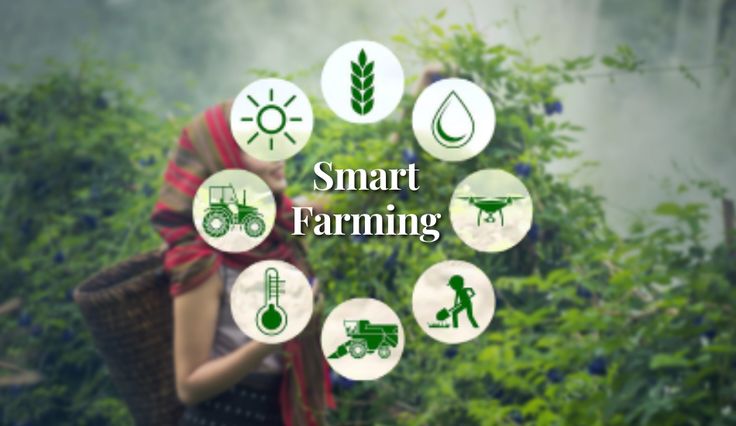
The concept of smart farming, which is also called precision agriculture, involves monitoring, measuring, and managing agricultural practices through digital technology in a very accurate manner. Rather than watering an entire piece of land with equal amounts of water or spraying fertilizers and pesticides everywhere, smart farming helps farmers deliver the right amount of resources in the right place at the right time.
Not only does it lead to resource savings but also helps protect the environment from negative impacts of excess amounts of chemicals applied in a non-selective manner. The key element of smart farming is data. Information is collected constantly with sensors located either in the ground, on machinery, or in the air in relation to moisture, temperature, the condition of crops, and so on. This data is analyzed, mostly thanks to the capabilities of artificial intelligence.
The Best Smart Farming Tools in 2026
Below is a breakdown of the most impactful smart farming tools currently transforming agriculture, along with what they do and how they contribute to efficiency and sustainability.
Soil Sensors and Moisture Monitors
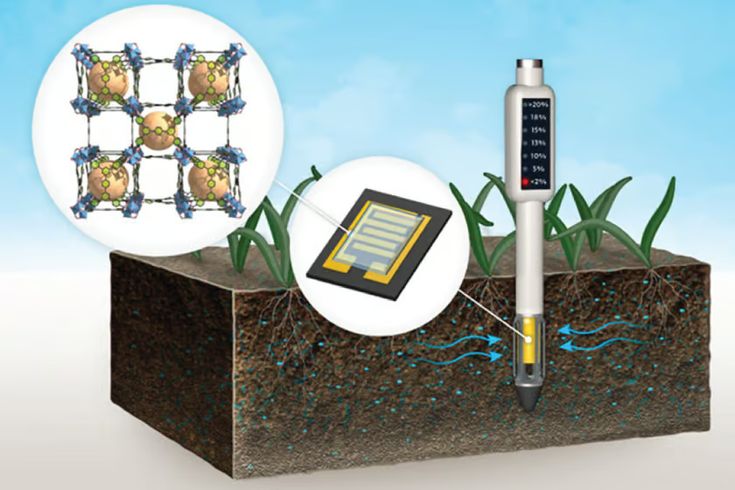
Soil sensors are some of the most basic forms of smart agriculture technologies. The sensors are placed within the soil where they continuously detect moisture, temperature, soil pH, and nutrients. The data is then sent to a farmer’s phone or computer through wireless signals where he makes irrigation and fertilizer decisions. When the farmer knows the time the soil moisture is too low, he can irrigate his plants in order to prevent under-irrigation or over-irrigation of crops.
Precision Irrigation Systems
Water shortage has become one of the main challenges to agriculture all over the world. Precision irrigation techniques, like drip irrigation systems with smart valves and timers, deliver water directly to plant roots based on real-time soil sensor and weather forecast data. This technique can help save a lot of water in comparison with other irrigation techniques.
Drones for Aerial Crop Monitoring
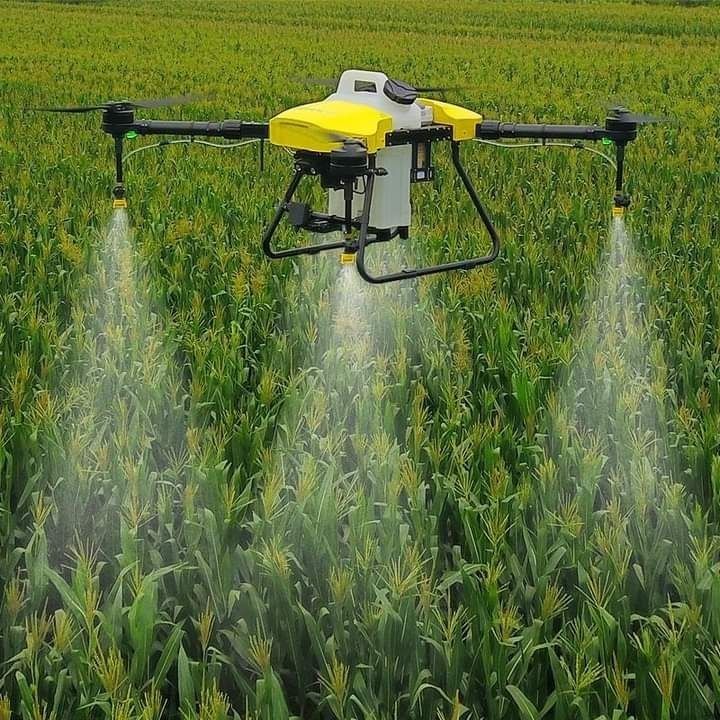
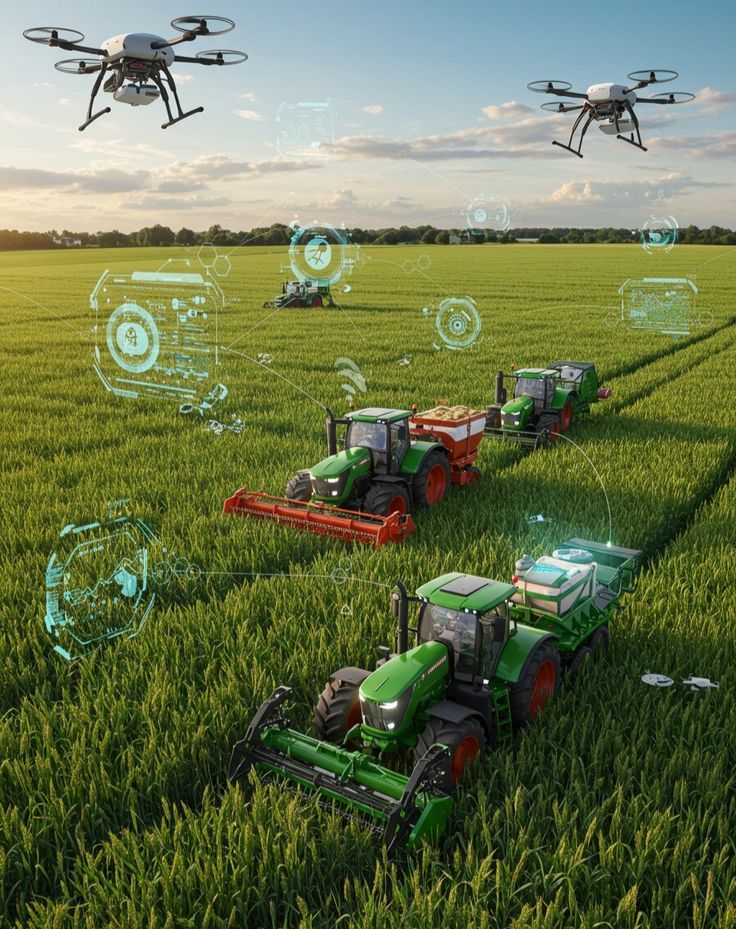
Agricultural drones fitted with multispectral cameras enable farmers to scan vast areas of agricultural land within a matter of minutes. The drones provide high-quality images which indicate plant stress, pest infestation, water management issues, and mineral deficiencies even before these become noticeable through naked eye observation. Drone technology is particularly useful in large scale farming enterprises.
GPS-Guided Tractors and Autonomous Machinery
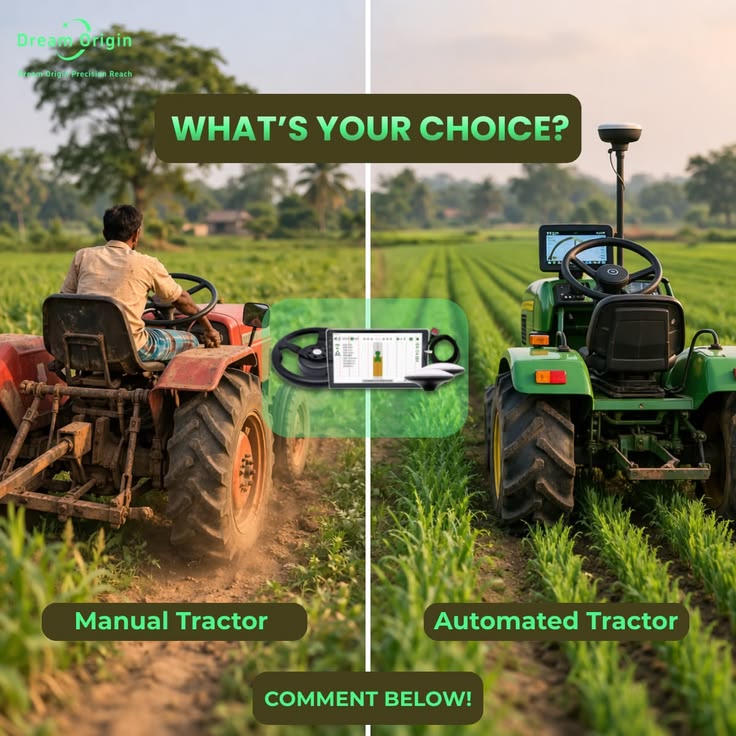
GPS-guided tractors handle planting, tilling, and harvesting with centimeter-level accuracy. This helps save on seeds, time, and fuel since there are no overlaps or gaps in the rows during planting. The most advanced machines have even made the machines autonomous and able to function with little human intervention, especially because of labor shortages in agriculture.
Farm Management Software Platforms
Software for Smart Farming acts as an interface that connects all information gathered by means of smart farming technologies. The software centralizes data from sensors, drones, weather stations, and equipment onto a convenient dashboard. With help of such software, one can manage costs, plan crop rotation, keep record of livestock, and generate reports.
Weather Stations and Predictive Analytics
On-farm weather stations provide hyper-local forecasts that are much more precise than regional weather reports. Using artificial intelligence and predictive analysis, farmers can predict frost, drought, or storm conditions and then prepare ahead of time.
AI-Powered Pest and Disease Detection
The use of AI technology, coupled with images provided by drones and cameras, is capable of detecting early signs of pest infestation and diseases in crops, achieving impressive results. Early detection allows farmers to take swift action and apply necessary interventions before an infestation develops throughout their field and causes any crop losses or the need for pesticide application.
Livestock Monitoring Wearables
On livestock farms, wearable sensors track crucial health metrics like body temperature, activity levels, and food consumption. This allows for early detection of possible diseases or problems with the well-being of any particular animal.
Robotic Harvesters
Computer vision and robotic arms have been applied in robotics harvesting systems, especially when handling fragile products such as berries and lettuce, to help pick out mature fruits or vegetables without causing any harm.
Blockchain-Based Supply Chain Tracking
Although it is not an instrument that is applied on-site, the use of blockchain is becoming more widespread when it comes to tracking of produce from the field to the dining table, which provides better transparency and ensures sustainable agricultural practices.
Why Smart Farming Tools Matter for Sustainability
There is no doubt that the number of people living in the world keeps growing; as a result, the need for food increases every day. Moreover, there are other problems that farmers have to deal with in their work – those include climate change, water shortage, poor quality of soil, and reduction of available space for planting.
The problem is that conventional farming technologies are inefficient concerning resource consumption. Smart agriculture technology can help to solve the listed issues because they make it possible to: Reduce the amount of water used during irrigation by delivering water only when it is necessary.
Comparison Table of Top Smart Farming Tools
| Tool | Primary Function | Key Benefit | Best Suited For |
|---|---|---|---|
| Soil Sensors | Monitor moisture, pH, and nutrients | Prevents over/under watering and fertilizing | All farm sizes |
| Precision Irrigation | Automated, targeted water delivery | Reduces water waste significantly | Water-scarce regions |
| Agricultural Drones | Aerial crop imaging and monitoring | Early detection of crop stress | Medium to large farms |
| GPS-Guided Tractors | Automated planting and harvesting | Saves fuel, seed, and labor time | Large-scale row crop farms |
| Farm Management Software | Centralized data and planning | Simplifies decision-making | All farm sizes |
| Smart Weather Stations | Hyper-local forecasting | Improves planning accuracy | All farm sizes |
| AI Pest/Disease Detection | Identifies threats early | Reduces pesticide use and crop loss | Crop-intensive farms |
| Livestock Wearables | Tracks animal health metrics | Improves animal welfare | Livestock and dairy farms |
| Robotic Harvesters | Automated picking of produce | Addresses labor shortages | Fruit and vegetable farms |
| Blockchain Tracking | Supply chain transparency | Builds consumer trust | Farms selling direct-to-market |
How to Choose the Right Smart Farming Tools for Your Operation
Not all of the mentioned tools will be necessary for every single farm. Which exact combination will suit your operation best will depend on its size, what you farm, your budget, and sustainability priorities.
While a small farmer may want to buy just a simple soil moisture sensor and a farm management software, a commercial business will probably be able to afford a complete package of drones, automated equipment, and AI algorithms. It always makes sense to start with the tools that will help to solve your primary problem. If lack of water is your greatest obstacle, you should consider using precision irrigation first. And if your greatest problems used to be pest infestations, then an AI-based monitoring system is the answer.
The Future of Smart Farming
In this regard, as artificial intelligence, satellites and robotics improve even further, it will get easier for farmers to use smart technologies. Some of these new technologies include autonomous robots that weed out weeds, satellite soil analysis, as well as advanced AI technologies that predict crop yields months in advance. In the future, farming will depend on a comprehensive network of devices and software that work together in order to create food using less resources.
Conclusion
Smart farming devices can be considered one of the most advanced ways of ensuring a better future for agriculture. Through soil sensors, precision irrigation, drones, AI analysis, and robotic harvesters, smart devices allow farmers to make better choices, save natural resources, and boost their efficiency levels. With the increasing climate changes and rising demands for food, the adoption of the right amount of smart farming devices is not an option but a necessity for progressive farmers.