

Comparing the best AI avatar platforms for digital signage in 2026. AI and more — with real pricing, use cases, and honest trade-offs.
The Ultimate Guide to the Best AI Avatar Platforms for Digital Signage
I walked past a mall kiosk in Lahore last month and did a double-take. The “person” on the screen turned her head, blinked, and asked if I wanted directions to the food court. She wasn’t real. It took me a solid three seconds to be sure.
That’s basically the whole pitch for the best AI avatar platforms for digital signage right now — screens that don’t just display, they perform. And the market has gone from novelty to genuine infrastructure spend faster than almost anyone predicted in 2023.
Here’s what surprised me digging into this: the money isn’t chasing the flashiest demos. It’s chasing the boring stuff — training videos, multilingual store announcements, airport wayfinding. Glamorous? Not really. Profitable? Extremely.
Market Landscape: Top AI Avatar Platforms for Digital Signage
I walked past a mall kiosk in Lahore last month and did a double-take. The “person” on the screen turned her head, blinked, and asked if I wanted directions to the food court. She wasn’t real. It took me a solid three seconds to be sure.
That’s basically the whole pitch for the best AI avatar platforms for digital signage right now — screens that don’t just display, they perform. And the market has gone from novelty to genuine infrastructure spend faster than almost anyone predicted in 2023.
Here’s what surprised me digging into this: the money isn’t chasing the flashiest demos. It’s chasing the boring stuff — training videos, multilingual store announcements, airport wayfinding. Glamorous? Not really. Profitable? Extremely.stomer service rep that happens to be pixels.
Key Trends in Digital Signage AI Avatars
A few things stood out as I went through recent reporting and vendor documentation.
Pricing is quietly becoming the real battleground. Per-minute API pricing — the model D-ID and several smaller players use — sounds cheap until you multiply it across an 8-hour signage loop, seven days a week. One industry comparison I came across put per-minute-billed avatar platforms at $77 to $374 for a single 8-hour day of continuous runtime, versus roughly $8 a day for a platform built with flat-rate, always-on kiosk pricing in mind. That’s not a rounding error — that’s the difference between a pilot program and something finance actually approves for 40 locations.
Voice architecture is getting treated as a first-class design decision, not an afterthought. OpenAI’s own guidance on building voice agents recommends locking down the audio pipeline before anything else gets designed around it — and that principle maps directly onto public kiosks. If the microphone can’t cut through mall ambient noise or a food court at lunch rush, the fanciest avatar face in the world is useless. I’d argue this is the single most underrated factor in signage deployments failing quietly six weeks after launch.
Nobody’s talking enough about the CMS gap. Most avatar platforms generate a video file and stop there. They don’t manage screen groups, scheduling, or playback monitoring — that’s still a separate signage CMS layer (think BrightSign, Yodeck, or similar). Vendors like Leadde have started positioning themselves around automating the document-to-video-to-playlist pipeline end to end, which — if it holds up in practice — could cut a real chunk of the manual production hours that eat signage budgets today.

Comparison Table: Traditional, AI-Only, and Hybrid Approaches
| Traditional Video/EA Team | AI-Only Avatar Platform | Hybrid Model | |
|---|---|---|---|
| Content update speed | Days to weeks (reshoot, edit) | Minutes (regenerate script) | Hours (human review + AI render) |
| Cost per update | High (crew, studio, talent) | Low, but multiplies with per-minute billing | Moderate — one-time human polish, AI scale |
| Multilingual support | Requires separate shoots/dubbing | Native, near-instant | Native, plus cultural review layer |
| Live interactivity | None | Depends on platform (see kiosk vs. video split above) | Possible with LLM + human escalation path |
| Brand consistency risk | Low, tightly controlled | Moderate — AI can drift off-brand without guardrails | Low — human sign-off before publish |
| Best fit | High-stakes brand campaigns, flagship launches | High-volume, low-stakes messaging (hours, promos, wayfinding) | Enterprise fleets needing scale and control |
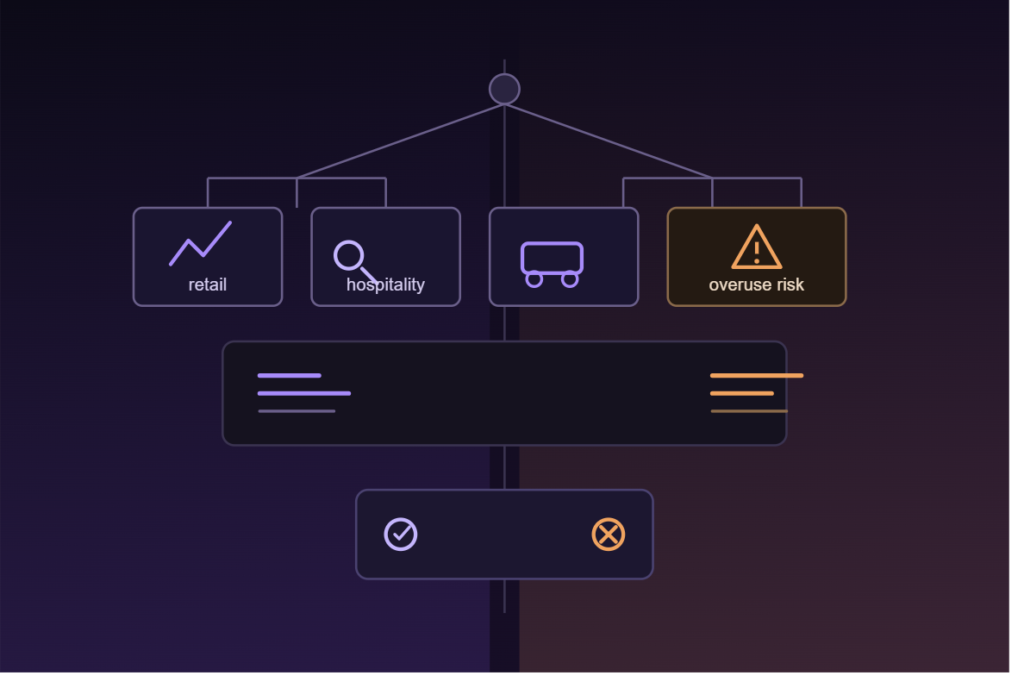
Retail, hospitality, and transportation are the obvious early adopters — restaurant menu boards that update by daypart, hotel lobby avatars that switch language based on the guest checking in, airport screens that answer “where’s gate B12” without a human standing there. Healthcare and education signage are picking this up too, mostly for wayfinding and onboarding.
Here’s my honest, slightly contrarian take though: a lot of this deployment is still solving a problem nobody asked to have solved. Not every static poster needs a talking face. I’ve sat through vendor pitches where an avatar was bolted onto a message that would’ve worked just as well as text on a screen — sometimes better, because a giant animated face demanding your attention in a quiet waiting room is genuinely a little unsettling. The tech works. Whether it’s the right tool for a given screen is a separate question, and I don’t think the industry asks it often enough before signing the contract.
There’s also a skeptical voice worth including here, not just the vendor cheerleading. Analysts covering the broader synthetic media space have flagged that enterprise buyers frequently overestimate how “set and forget” these platforms are — someone still has to manage prompt quality, brand tone drift, and the occasional avatar mispronunciation that goes viral for the wrong reasons. Budget for that ongoing oversight, not just the license fee.
Future Outlook
Where does this go next? I’d bet on consolidation between the video-generation layer and the signage CMS layer — buyers are tired of stitching together two vendors and a Zapier workflow just to get a script onto a screen. I’d also expect the noise-robustness and always-on pricing problems to get solved by whoever’s willing to build purpose-built hardware rather than repurposing consumer-facing video APIs never designed to run 24/7 unattended.
The interactive kiosk segment — DeepBrain AI’s lane, and increasingly UneeQ’s — feels like the more durable long-term bet versus pure video generation, simply because two-way interaction is harder to commoditize than a rendered clip.
Wrapping Up
If you’re evaluating the best AI avatar platforms for digital signage for your own rollout, the real first question isn’t “which avatar looks the most realistic.” It’s “does my screen need to talk, or does it need to listen back?” Those are different budgets, different vendors, and honestly, different problems.
What’s your signage actually trying to do — inform, or interact? Drop a comment with your use case and I’ll point you toward the platforms that actually fit it, not just the ones topping everyone else’s listicle this month.