
Introduction to Cloud Computing Essentials
Discover the cloud computing essentials for businesses, including key benefits like cost savings, scalability, security, and performance.
In today’s fast-moving digital economy, businesses are under constant pressure to improve performance, reduce operational costs, and stay competitive.”In this article, we will explore the cloud computing essentials that every business needs to understand.” Technology is no longer just a support system; it has become the backbone of almost every successful organization. Among all modern technologies, cloud computing stands out as one of the most powerful innovations shaping how companies operate. When organizations understand cloud computing essentials unlock benefits that directly impact efficiency, scalability, and long-term growth.
Cloud computing is the delivery of computing services such as storage, servers, databases, software, networking, and analytics through the internet. Instead of maintaining physical infrastructure in offices or data centers, businesses access these resources online. This removes the need for heavy hardware investment and reduces the burden of maintenance and upgrades.
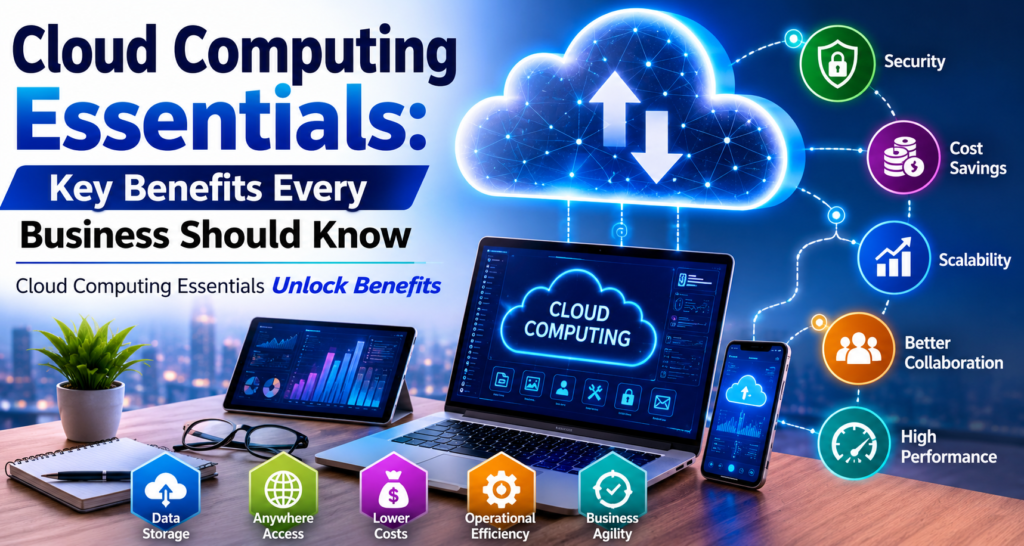
What makes cloud computing even more important is its flexibility. Companies are no longer restricted by physical limitations. They can scale operations instantly, support remote teams, and manage global customers without setting up complex infrastructure. This transformation is especially important in a world where digital presence determines business success.
Understanding cloud computing essentials is not just about knowing technology; it is about recognizing how this technology can transform entire business models. From startups trying to grow quickly to large enterprises managing global operations, cloud computing has become a universal solution.
How Cloud Computing Works and Its Core Models
Cloud computing operates on a simple but powerful concept: shared computing resources delivered over the internet by specialized providers. These providers manage large-scale data centers that host and distribute services to businesses across the world. Instead of owning physical servers, companies rent computing power and storage as needed.

This model eliminates many traditional IT challenges. Businesses no longer need to worry about server maintenance, software installation, or hardware failures. Everything is managed by cloud providers, allowing organizations to focus on innovation and strategy rather than technical operations.
Another important aspect of cloud computing is its service structure. These service models define how resources are delivered and what level of control businesses have over them. Choosing the right model depends on business requirements, technical expertise, and budget.
Cloud computing also works on demand. If a company experiences sudden traffic spikes, it can instantly increase its resources. Similarly, during low usage periods, resources can be reduced to save costs. This dynamic nature is one of the strongest reasons why understanding cloud computing essentials unlock benefits across industries.
Core Cloud Service Models
| Cloud Service Model | What It Provides | Why Businesses Use It |
|---|---|---|
| Infrastructure as a Service (IaaS) | Virtual servers, storage, and networking resources | Full control over IT systems without physical hardware |
| Platform as a Service (PaaS) | Development environments and tools for applications | Faster software development and deployment |
| Software as a Service (SaaS) | Fully managed applications accessible online | Easy use of software without installation or maintenance |
Why Businesses are Switching to the Cloud?
Cloud computing is no longer just an option for businesses; it has become a necessity. One of the biggest reasons companies are moving to the cloud is cost savings. Instead of buying expensive servers and maintaining IT teams, businesses can just rent storage and software from cloud providers like AWS, Google Cloud,
Another major benefit is flexibility and scalability. Whether you are a small startup or a large company, you can easily increase your data storage as your business grows. Plus, cloud computing allows your team to work from anywhere in the world. All they need is an internet connection to
Lastly, data backup and security are highly managed in the cloud. Even if your office computer breaks down, your data remains completely safe in the cloud server,
Each model plays a different role in business operations. IaaS is ideal for companies that want control over infrastructure, PaaS is best for developers building applications, and SaaS is perfect for everyday business tools like email, CRM, and accounting systems. Understanding these models helps businesses make smarter technology decisions.
Key Business Benefits of Cloud Computing
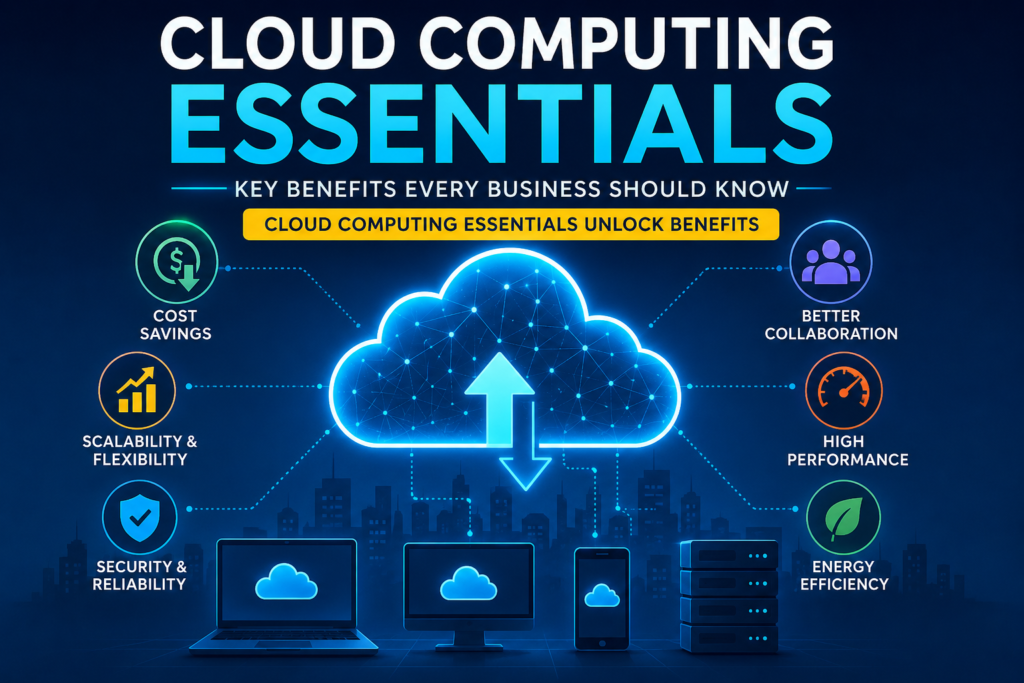
One of the most significant advantages of cloud computing is cost reduction. Traditional IT systems require heavy investment in servers, storage devices, and technical staff. These costs can be difficult for small businesses to manage. Cloud computing removes this barrier by offering a pay-as-you-go model where businesses only pay for what they use.
This pricing structure allows companies to manage budgets more effectively and avoid unnecessary expenses. It also helps startups enter the market without large capital investment, making technology accessible to everyone.

Scalability is another powerful benefit. Businesses often experience fluctuations in demand, especially during seasonal peaks or marketing campaigns. Cloud computing allows them to scale resources instantly without delays. This flexibility ensures smooth performance even during high traffic periods.
Security is a major concern for modern organizations, and cloud providers address this with advanced protection systems. These include encryption, firewalls, identity verification, and continuous monitoring. Data is stored across multiple secure locations, which reduces the risk of data loss. In many cases, cloud platforms provide stronger security than traditional in-house systems.
Collaboration also improves significantly with cloud computing. Employees can access data and applications from anywhere in the world. This supports remote work environments and global teams. Real-time collaboration tools allow multiple users to work on the same document or project simultaneously, improving productivity and communication.
Another major benefit is system reliability. Cloud platforms are designed to ensure maximum uptime. Even if one server fails, backup systems immediately take over. This ensures that businesses experience minimal downtime and maintain continuous operations.
Understanding cloud computing essentials unlock benefits that go beyond technology—it improves business continuity, customer experience, and operational efficiency.
Cloud Deployment Options and Strategic Use
Cloud computing is not a one-size-fits-all solution. Businesses can choose from different deployment models depending on their goals, security needs, and operational structure. These deployment options allow organizations to design cloud strategies that match their specific requirements.
Some companies prefer public cloud environments because they are cost-effective and easy to use. Others require private clouds for sensitive data and strict compliance requirements. Many modern businesses use hybrid models that combine both approaches for maximum flexibility.
Choosing the right deployment strategy is an important decision because it affects performance, security, and cost efficiency. A well-planned cloud strategy ensures long-term success and reduces operational risks.
Cloud Deployment Models
| Deployment Model | Description | Ideal For |
|---|---|---|
| Public Cloud | Shared cloud infrastructure managed by providers | Small and medium businesses seeking low cost solutions |
| Private Cloud | Dedicated infrastructure used by one organization only | Enterprises with high security and compliance needs |
| Hybrid Cloud | Combination of public and private cloud systems | Businesses needing both flexibility and control |
Each model offers unique advantages. Public cloud is affordable and scalable, private cloud offers enhanced security, and hybrid cloud provides a balanced approach. Businesses often evolve from one model to another as they grow and their requirements become more complex.
Cloud computing also plays a major role in innovation. Companies can quickly test new ideas, deploy applications, and experiment with digital solutions without investing in expensive hardware. This encourages creativity and reduces the time required to bring new products to market.
In addition, cloud platforms support modern technologies such as artificial intelligence, machine learning, and big data analytics. These tools help businesses make better decisions based on real-time insights. This level of innovation would be difficult and expensive to achieve using traditional IT systems.
Conclusion
Cloud computing has become an essential foundation for modern businesses operating in a digital world. It provides flexibility, cost savings, enhanced security, and powerful scalability that traditional systems cannot match. By understanding cloud computing essentials unlock benefits that transform how businesses operate, grow, and compete.
From improving collaboration and productivity to ensuring business continuity and enabling innovation, cloud computing offers a complete solution for organizations of all sizes. Whether a company is a startup or a global enterprise, adopting cloud technology is no longer optional—it is a strategic necessity for long-term success in today’s competitive market.If you want to dive deeper into official documentations, you can check the resources provided byAWS Cloud Services. For more exciting tech tutorials and updates, don’t forget to explore our other guides onDaily Open Source.
Additionally, implementing these cloud essentials helps modern businesses stay agile. When organizations adopt the right service models—whether it is infrastructure, platform, or software—they significantly reduce their operational headaches and focus purely on innovation and scaling their products globally.