
Introduction
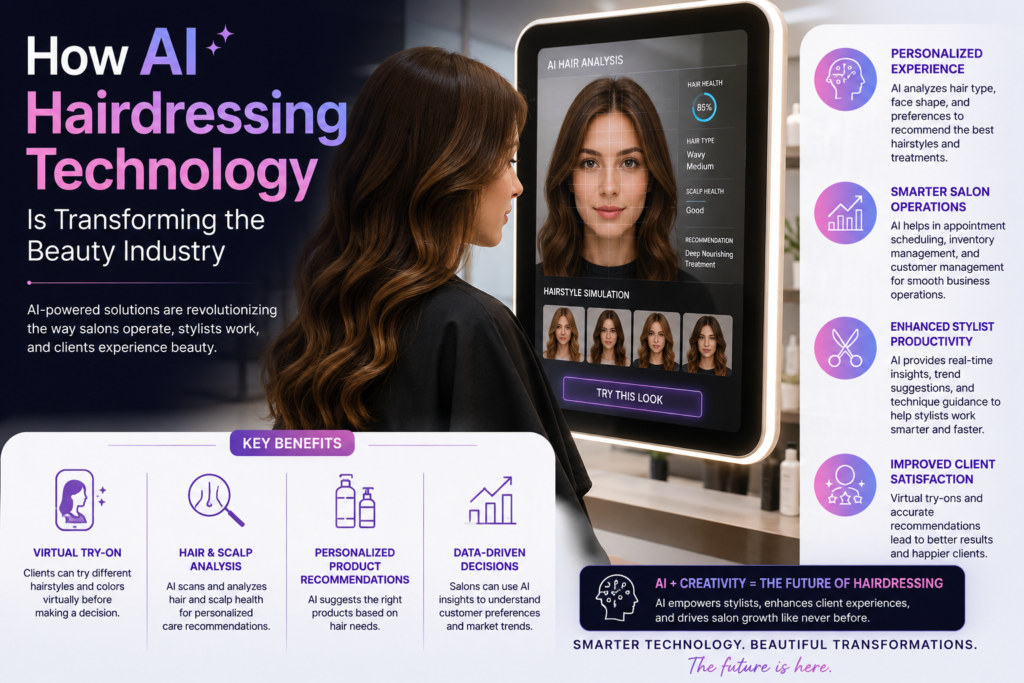
The beauty industry has always embraced innovation, from advanced skincare treatments to modern hairstyling techniques. Today, a new revolution is reshaping the sector: AI Hairdressing Technology. Artificial Intelligence (AI) is changing how salons operate, how hairstylists work, and how customers choose hairstyles. By combining machine learning, computer vision, facial recognition, and data analysis, AI hairdressing technology is creating personalized, efficient, and highly satisfying beauty experiences.
In recent years, consumers have become more demanding. They want customized services, instant results, and confidence before making beauty decisions. Traditional consultations often relied on the experience of hairstylists and the imagination of clients. However, misunderstandings sometimes led to disappointing outcomes. AI technology addresses these challenges by providing virtual previews, personalized recommendations, and data-driven insights.
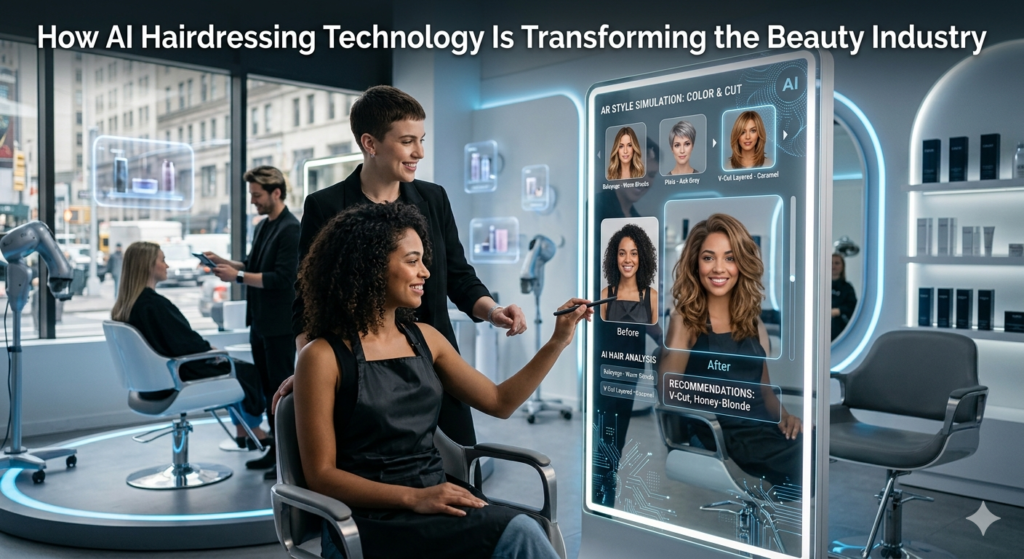
From virtual hairstyle try-ons to smart salon management systems, AI is rapidly becoming an essential tool in the beauty industry. This article explores how AI hairdressing technology is transforming salons, enhancing customer experiences, improving business operations, and shaping the future of beauty.
Understanding AI Hairdressing Technology
AI hairdressing technology refers to the use of artificial intelligence tools and software designed to assist hairstylists and customers. These systems analyze facial features, hair texture, skin tone, personal preferences, and beauty trends to recommend suitable hairstyles, haircuts, and hair colors.
The technology often incorporates:
- Machine Learning Algorithms
- Facial Recognition Systems
- Augmented Reality (AR)
- Computer Vision
- Predictive Analytics
- Virtual Consultation Platforms
By analyzing large amounts of beauty-related data, AI can provide recommendations that were previously only possible through years of professional experience.
The Rise of Virtual Hairstyle Try-On Technology
One of the most popular applications of AI in hairdressing is virtual hairstyle simulation. Customers can upload a photo or use a live camera to see how different hairstyles and hair colors would look on them before making any changes.
Benefits of Virtual Try-Ons
Increased Customer Confidence
Many clients hesitate to try new hairstyles because they fear the results. AI-powered virtual try-ons remove uncertainty by offering realistic previews.
Better Decision-Making
Customers can compare multiple styles and colors instantly, helping them make informed decisions.
Reduced Dissatisfaction
When customers know what to expect, the chances of disappointment decrease significantly.
Time Savings
Both hairstylists and clients spend less time discussing possibilities because visual demonstrations make communication easier.
This technology has become especially valuable in online beauty consultations and digital salon services.
Personalized Hair Recommendations Through AI
Personalization is one of the biggest trends in the beauty industry. AI excels at delivering customized recommendations based on individual characteristics.
How AI Creates Personalized Suggestions
AI systems analyze:
- Face Shape
- Hair Thickness
- Hair Texture
- Skin Tone
- Lifestyle Preferences
- Age Group
- Fashion Trends
For example, a person with a round face may receive recommendations for layered hairstyles that create the illusion of length. Similarly, someone with curly hair may receive suggestions specifically designed to enhance natural curls.
These personalized recommendations help clients achieve styles that complement their unique features rather than simply following generic beauty trends.
AI-Powered Hair Color Selection
Choosing the right hair color can be difficult. Many customers struggle to visualize how a color will appear on their actual hair.
AI hair color tools solve this problem by:
- Simulating realistic color changes
- Matching colors with skin tones
- Predicting fading patterns
- Recommending maintenance schedules
- Suggesting seasonal color trends
As a result, customers can confidently select hair colors that enhance their appearance and suit their personal style.
Smart Salon Consultations
Traditional consultations often depend on verbal communication. AI is making consultations more precise and interactive.
Features of AI Consultation Systems
Facial Analysis
AI examines facial symmetry, shape, and proportions.
Hair Health Assessment
Computer vision can evaluate hair condition, damage levels, and scalp health.
Style Matching
AI compares customer characteristics with thousands of hairstyle examples.
Digital Portfolios
Stylists can instantly present customized hairstyle recommendations.
These features improve communication and reduce misunderstandings between clients and professionals.
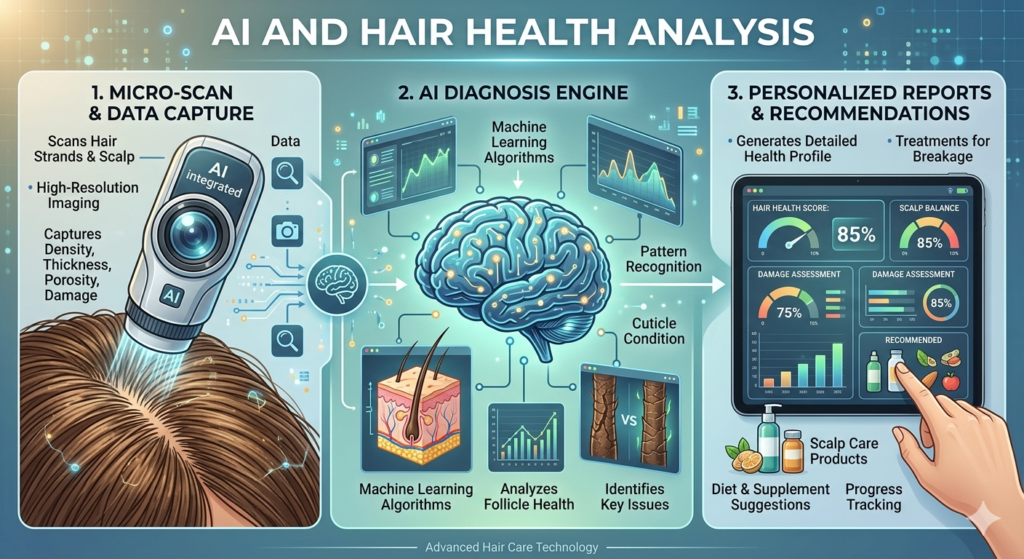
AI and Hair Health Analysis
Healthy hair is the foundation of beautiful styling. AI is helping salons provide advanced hair care services through digital analysis.
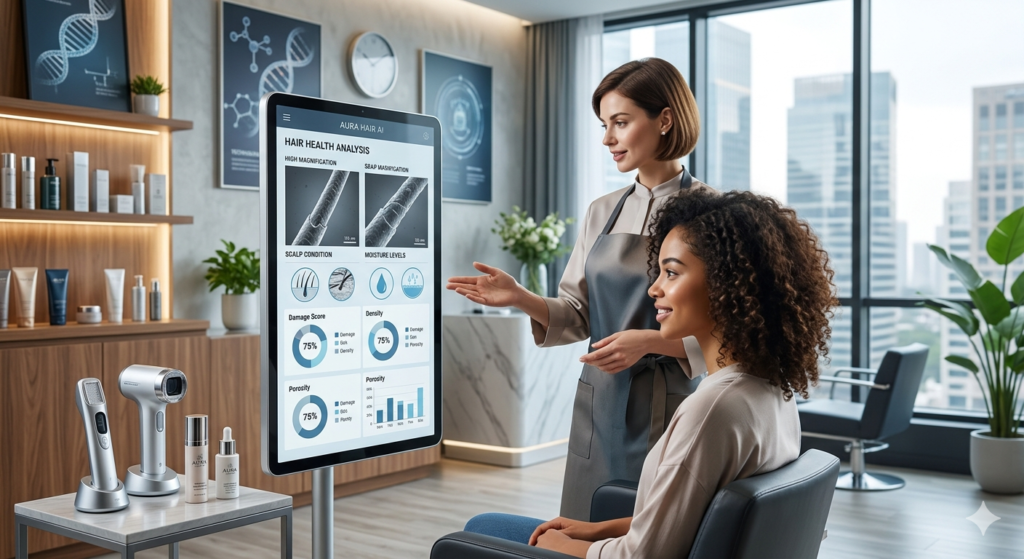
What AI Can Detect
- Dryness
- Split Ends
- Hair Breakage
- Scalp Conditions
- Hair Density
- Hair Growth Patterns
By identifying problems early, salons can recommend targeted treatments that improve long-term hair health.
Some AI systems even track hair improvement over time, allowing customers to monitor their progress through digital reports.
Enhancing Stylist Performance
AI is not replacing hairstylists. Instead, it acts as a powerful assistant that enhances professional expertise.
Benefits for Stylists
Faster Consultations
AI quickly gathers information and generates recommendations.
Better Creativity
Stylists can explore innovative hairstyle ideas based on AI suggestions.
Continuous Learning
AI systems provide access to global hairstyle trends and techniques.
Improved Accuracy
Recommendations become more precise through data-driven analysis.
This partnership between human creativity and artificial intelligence results in superior customer experiences.
AI-Powered Salon Management
Beyond hairstyling itself, AI is transforming salon operations.
Appointment Scheduling
AI scheduling systems can:
- Manage bookings automatically
- Reduce no-shows
- Send reminders
- Optimize staff availability
Inventory Management
AI tracks product usage and predicts inventory needs.
Customer Relationship Management
AI analyzes customer behavior and preferences to deliver personalized marketing campaigns and promotions.
Revenue Forecasting
Salon owners can use predictive analytics to estimate future demand and make informed business decisions.
These capabilities improve efficiency and profitability while reducing administrative burdens.
AI and Beauty Trend Prediction
Fashion and beauty trends change rapidly. Staying ahead of trends is essential for salons.
AI analyzes:
- Social Media Activity
- Celebrity Hairstyles
- Fashion Shows
- Search Engine Data
- Consumer Behavior
This information helps salons anticipate emerging trends before they become mainstream.
As a result, businesses can offer innovative services that attract trend-conscious customers.
The Role of Augmented Reality in Hairdressing
Augmented Reality works closely with AI to create immersive beauty experiences.
How AR Enhances Hairdressing
AR overlays digital hairstyles onto a customer’s image in real time.
Customers can:
- Rotate their head
- View hairstyles from multiple angles
- Compare different colors
- Experiment with lengths and textures
This interactive experience makes hairstyle selection more engaging and enjoyable.
Online Beauty Consultations and Remote Services
The growth of digital beauty services has accelerated the adoption of AI technology.
Customers can now receive:
- Virtual Consultations
- Hair Health Assessments
- Style Recommendations
- Product Suggestions
Without visiting a salon, users can access professional guidance from anywhere in the world.
This convenience has expanded business opportunities for beauty professionals while increasing accessibility for customers.
AI-Driven Product Recommendations
Hair care products play a critical role in maintaining salon results.
AI systems recommend products based on:
- Hair Type
- Scalp Condition
- Styling Goals
- Climate Factors
- Previous Purchases
These recommendations improve customer satisfaction while increasing retail sales for salons.
Customer Experience Revolution
Customer experience has become a major competitive advantage in the beauty industry.
AI contributes by providing:
- Faster Service
- Personalized Recommendations
- Accurate Visualizations
- Seamless Booking
- Tailored Marketing
When customers feel understood and valued, loyalty increases significantly.
Many salons report higher customer retention rates after implementing AI-powered technologies.
Challenges and Limitations of AI Hairdressing Technology
Despite its advantages, AI technology also faces challenges.
Data Privacy Concerns
AI systems often require photos and personal information. Protecting customer data is essential.
Technology Costs
Advanced AI solutions may require significant investments, particularly for smaller salons.
Accuracy Limitations
Although highly advanced, AI recommendations are not always perfect and may occasionally misinterpret individual preferences.
Human Creativity Remains Essential
Hairdressing is an artistic profession. AI can support decision-making but cannot fully replace the creativity, intuition, and emotional intelligence of experienced hairstylists.
Future Trends in AI Hairdressing
The future of AI hairdressing technology looks extremely promising.
Emerging innovations include:
AI Hairstyle Generators
Customers may soon generate entirely unique hairstyles using AI design systems.
Smart Mirrors
Interactive mirrors will provide real-time recommendations during salon visits.
Voice-Assisted Beauty Consultations
AI assistants could answer beauty questions instantly.
Predictive Hair Health Monitoring
Advanced sensors may continuously monitor hair condition and recommend treatments before damage becomes visible.
Fully Personalized Beauty Ecosystems
AI will connect hairstyling, skincare, cosmetics, and fashion recommendations into a single personalized platform.
Economic Impact on the Beauty Industry
AI technology is creating significant economic opportunities.
Benefits include:
- Increased Salon Efficiency
- Higher Customer Retention
- Better Resource Management
- Enhanced Service Quality
- New Revenue Streams
Businesses that adopt AI early may gain a competitive advantage in an increasingly digital marketplace.
Industry experts predict substantial growth in AI-powered beauty solutions over the next decade as technology becomes more affordable and accessible.
Conclusion
AI Hairdressing Technology is transforming the beauty industry by combining innovation, personalization, and efficiency. From virtual hairstyle try-ons and personalized recommendations to smart salon management and predictive trend analysis, AI is redefining how beauty services are delivered.
Rather than replacing hairstylists, AI empowers professionals with advanced tools that enhance creativity, accuracy, and customer satisfaction. Clients benefit from more confidence, better results, and highly customized experiences tailored to their unique needs.
As artificial intelligence continues to evolve, its influence on the beauty industry will only grow stronger. Salons that embrace AI technology today are positioning themselves for long-term success in a future where personalization, convenience, and innovation drive customer expectations.
The transformation has already begun, and AI hairdressing technology is leading the next generation of beauty industry innovation.