
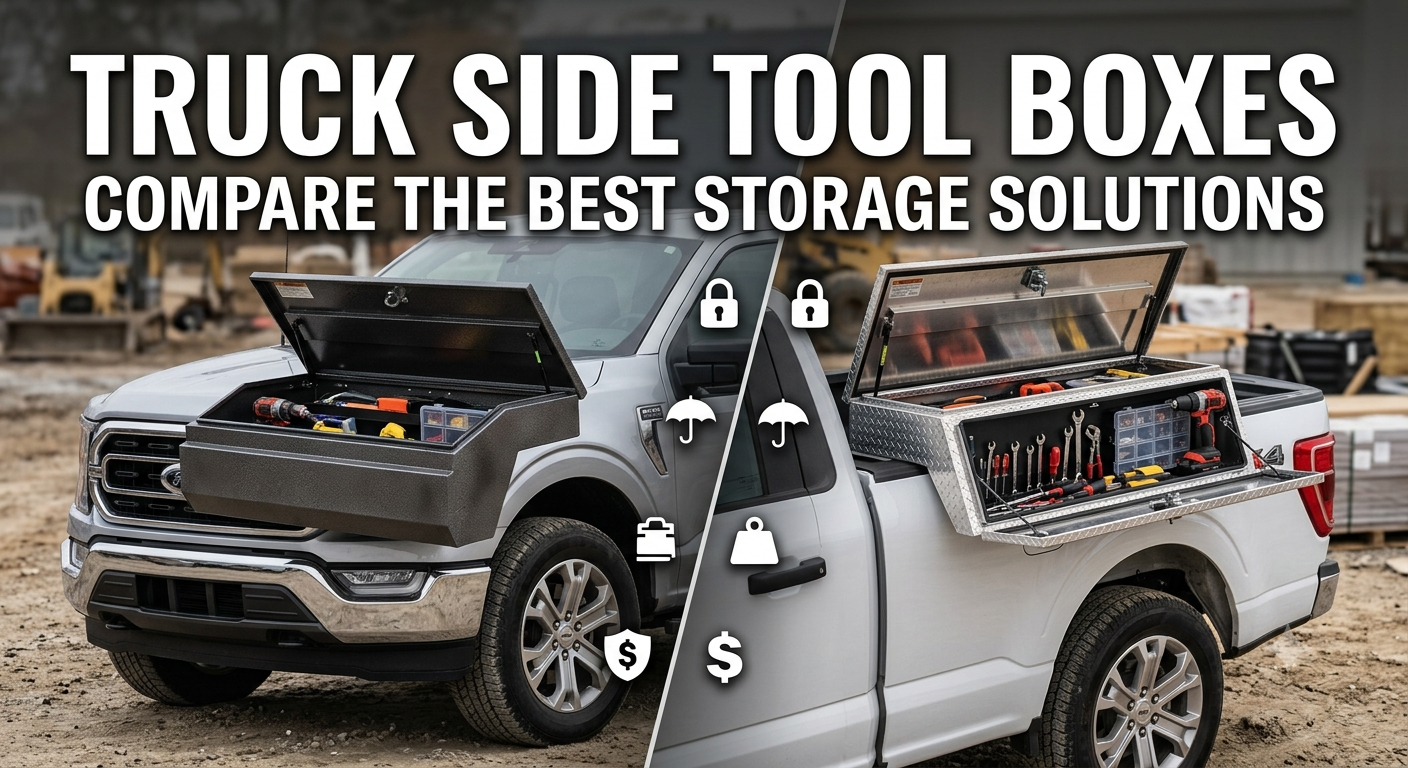
Truck side tool boxes are one of the most practical upgrades for truck owners who need secure, organized, and weather-resistant storage. Whether you’re a contractor, mechanic, landscaper, or weekend DIY enthusiast, having a dedicated place for your tools helps improve efficiency and protects your equipment from theft and harsh weather.
With so many styles, materials, and sizes available, choosing the right toolbox can feel overwhelming. In this guide, we’ll compare the best truck side tool boxes, explain their key features, and help you find the ideal storage solution for your truck and your daily needs
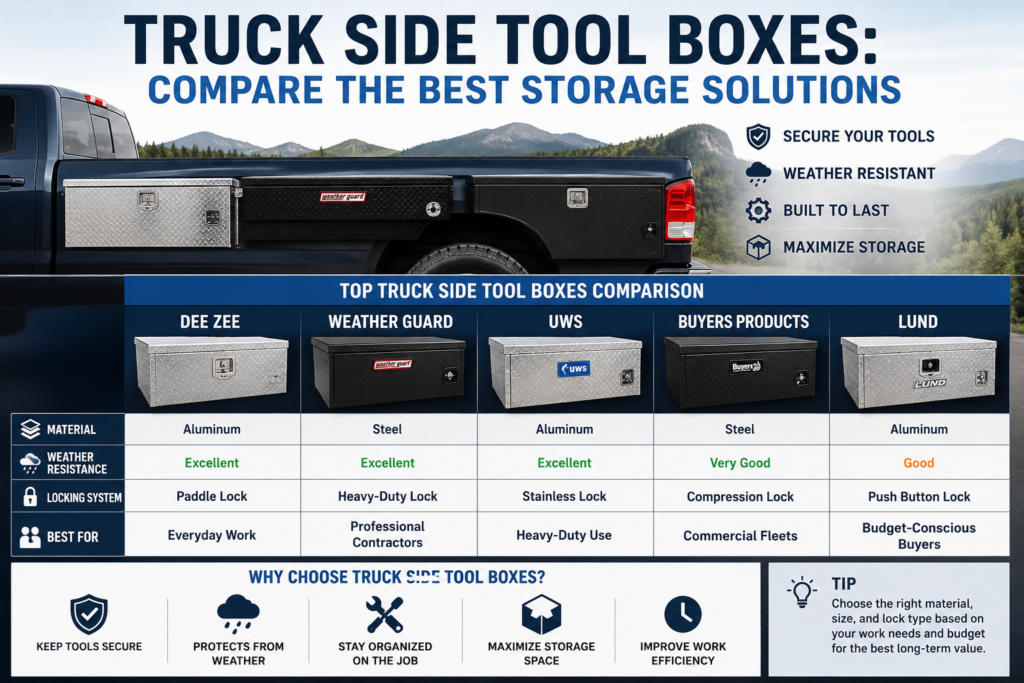
Why Choose Truck Side Tool Boxes as a Storage Solution?
The structural advantage of side tool boxes boils down to accessibility. Instead of climbing into the bed or stretching over the tailgate to reach a central box, side boxes sit parallel to your truck bed rails. You can pop the locks and grab what you need while standing safely on the curb.
For contractors, outdoor enthusiasts, and tradespeople, this layout preserves a clear path from the tailgate down to the cab. If you regularly haul drywall, lumber, or ATVs, side boxes ensure you do not have to unload your entire cargo bed just to get to a basic socket set.
Comparing the Core Types of Truck Side Tool Boxes
Not all side storage is engineered the same way. Depending on your security needs, weather exposure, and frequency of use, your choice will generally fall into three design categories:
Innerside and Topsider Truck Side Tool Boxes
These boxes sit permanently on top of or just inside the bed rails. Topsiders mount directly on top of the rails, making them popular for work trucks because they maximize internal capacity. Innerside models hang down inside the bed, keeping a lower exterior profile.
- Best For: Heavy-duty trades, contractors, and those requiring maximum volume.
- Materials: Heavy-gauge diamond-plate aluminum or industrial steel.
Underbed Truck Side Tool Boxes
Common on flatbeds, service trucks, and lifted pickups, these boxes mount beneath the flatbed frame or truck body. They utilize dead space under the chassis, keeping your actual loading deck completely clear.
- Best For: Flatbed builds and commercial transport.
- Key Consideration: Requires high road clearance to avoid debris damage.
Pivot and Swing-Away Truck Side Tool Boxes
A modern innovation, these polymer composite boxes mount securely to the inside wall of the bed near the tailgate. With the pull of a release lever, they pivot 180 degrees over the tailgate for immediate access, then lock back into place over the wheel well.
- Best For: Casual DIYers, tailgating, and trucks with tonneau covers.
Key Features to Evaluate Before Buying
To ensure your investment survives years of abuse, pay close attention to structural components before making a decision.
Material Construction: Aluminum vs. Steel vs. Polyurethane
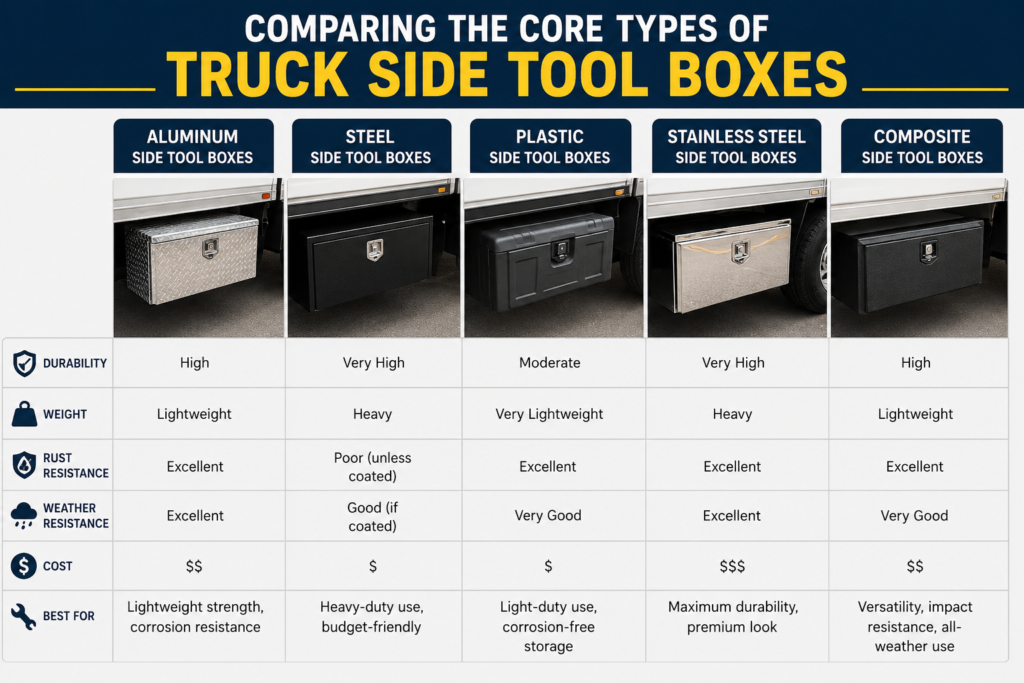
- Diamond-Plate Aluminum: The industry favorite. It provides excellent corrosion resistance, remains lightweight so it won’t impact your payload capacity significantly, and easily deflects minor dents.
- Powder-Coated Steel: Offers maximum security and structural rigidity against break-ins. However, if the powder coating scratches down to bare metal, rust can take hold quickly.
- High-Impact Polymers: Used primarily in swing-away systems. These won’t rust or dent, but they lack the heavy-duty load capacity of metal alternatives.
Weather Sealing and Latches
A tool box is only as good as its seal. Look for full-perimeter weather stripping (preferably automotive-grade rubber bulb seals) to prevent rain, dust, and snow from ruining your power tools. Latches should feature stainless steel paddle handles or push-button locks that pull the lid tight against the seal when closed.
Bed Cover Compatibility
If you run a tonneau cover or a truck cap, your options narrow. Topsider boxes will not work under a cover. However, low-profile innersides or swing-away boxes are often specifically designed to sit beneath standard roll-up or folding tonneau systems. Always measure the clearance between your inner bed rail and the top of the wheel well.
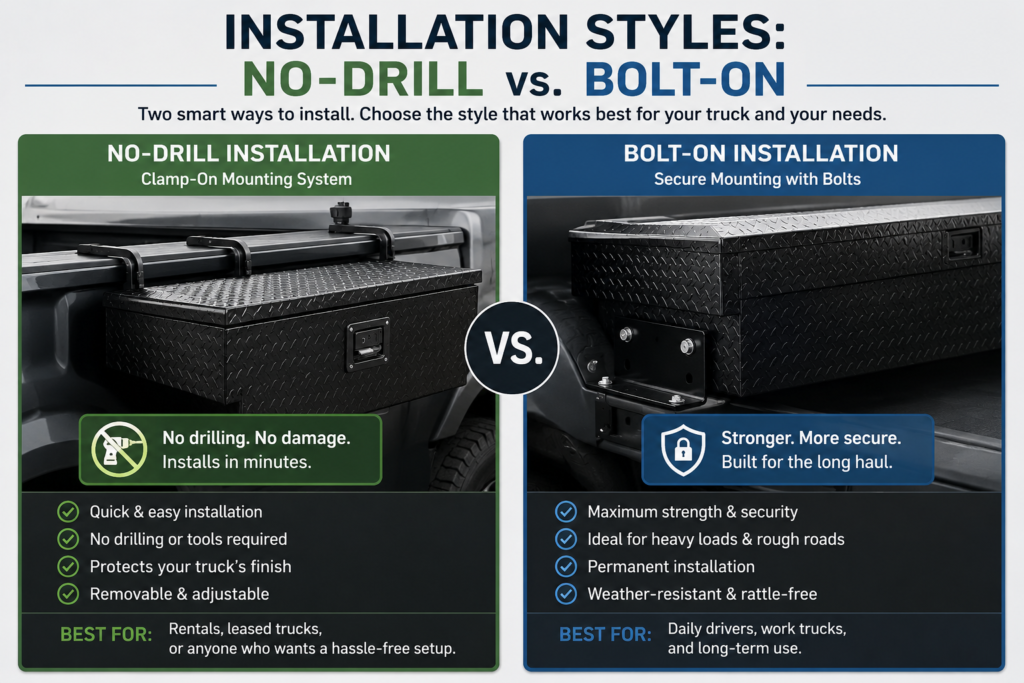
Installation Styles: No-Drill vs. Bolt-On
How your side box attaches to the vehicle affects both structural integrity and resale value.
- No-Drill J-Hook Mounting: Many innerside boxes use J-bolts that hook under the lip of your inner truck bed rail. This secures the box firmly without drilling permanent holes into your truck’s sheet metal, protecting it from rust points.
- Direct Bolt-On: For commercial topsiders or heavy underbed boxes, drilling directly into the bed frame or bed rails is mandatory. Always apply a rust-inhibitor or silicone sealant to any freshly drilled holes before inserting your mounting hardware.
For step-by-step guidance on vehicle-specific load limits and mounting safety, you can consult structural guidelines on the Sae International automotive resource platform.
Maximizing Your Layout
Once your boxes are installed, organization is what keeps them efficient. Because side boxes are narrow and deep, tools can easily become a tangled mess at the bottom. Use removable modular trays for small hardware, and reserve the deep sections for heavier items like tow straps, jumper cables, and impact wrenches.
Weight distribution matters too: if you install a side box on only one side of your vehicle, keep your heaviest gear closest to the cab to avoid creating a permanent lateral lean in your truck’s suspension.
Finalizing Your Storage Setup
Choosing the right truck side tool box comes down to balancing your daily hauling space against your security needs. If you need total open bed space for large equipment, a swing-away or underbed model is tough to beat. If you are running an active job site where heavy tools need to be organized and accessible all day, an aluminum innerside or topsider box provides the durability and immediate access required to keep your workflow moving efficiently. Consider your compatibility with existing bed covers, choose a corrosion-resistant material, and select a mounting style that matches your tolerance for modifications
Every truck owner eventually faces the same dilemma: how to securely store tools, straps, and gear without sacrificing the utility of an open truck bed. While standard crossover boxes sit right against the cab, they block front visibility and eat up valuable bed length.
Why Choose a Side-Mounted Storage Solution?
The structural advantage of side tool boxes boils down to accessibility. Instead of climbing into the bed or stretching over the tailgate to reach a central box, side boxes sit parallel to your truck bed rails. You can pop the locks and grab what you need while standing safely on the curb.
For contractors, outdoor enthusiasts, and tradespeople, this layout preserves a clear path from the tailgate down to the cab. If you regularly haul drywall, lumber, or ATVs, side boxes ensure you do not have to unload your entire cargo bed just to get to a basic socket set.
Comparing the Core Types of Truck Side Tool Boxes
Not all side storage is engineered the same way. Depending on your security needs, weather exposure, and frequency of use, your choice will generally fall into three design categories:
Innerside and Topsider Boxes
These boxes sit permanently on top of or just inside the bed rails. Topsiders mount directly on top of the rails, making them popular for work trucks because they maximize internal capacity. Innerside models hang down inside the bed, keeping a lower exterior profile.
- Best For: Heavy-duty trades, contractors, and those requiring maximum volume.
- Materials: Heavy-gauge diamond-plate aluminum or industrial steel.
Underbed Side Boxes
Common on flatbeds, service trucks, and lifted pickups, these boxes mount beneath the flatbed frame or truck body. They utilize dead space under the chassis, keeping your actual loading deck completely clear.
- Best For: Flatbed builds and commercial transport.
- Key Consideration: Requires high road clearance to avoid debris damage.
Pivot/Swing-Away Boxes
A modern innovation, these polymer composite boxes mount securely to the inside wall of the bed near the tailgate. With the pull of a release lever, they pivot 180 degrees over the tailgate for immediate access, then lock back into place over the wheel well.
Key Features to Evaluate Before Buying
To ensure your investment survives years of abuse, pay close attention to structural components before making a decision
Comparison Table: Best Truck Side Tool Boxes
| Tool Box Type | Best For | Pros | Cons | Typical Price |
|---|---|---|---|---|
| Aluminum Side Tool Box | Daily work trucks | Lightweight, rust-resistant, durable | Can dent under heavy impact | $150–$500 |
| Steel Side Tool Box | Heavy-duty contractors | Extremely strong, high security | Heavier, may rust without coating | $200–$700 |
| Plastic/Poly Tool Box | Occasional use | Affordable, weatherproof, lightweight | Less secure, lower durability | $80–$300 |
| Single Lid Side Box | Easy access to tools | Simple design, budget-friendly | Limited storage space | $100–$400 |
| Double Lid Side Box | Professional users | Better organization, larger capacity | Higher cost | $250–$800 |
| Locking Side Tool Box | Secure tool storage | Protects valuable equipment | Lock mechanisms require maintenance | $180–$650 |
.
Material Construction: Aluminum vs. Steel vs. Polyurethane
- Diamond-Plate Aluminum: The industry favorite. It provides excellent corrosion resistance, remains lightweight so it won’t impact your payload capacity significantly, and easily deflects minor dents.
- Powder-Coated Steel: Offers maximum security and structural rigidity against break-ins. However, if the powder coating scratches down to bare metal, rust can take hold quickly.
- High-Impact Polymers: Used primarily in swing-away systems. These won’t rust or dent, but they lack the heavy-duty load capacity of metal alternatives.
Weather Sealing and Latches
A tool box is only as good as its seal. Look for full-perimeter weather stripping (preferably automotive-grade rubber bulb seals) to prevent rain, dust, and snow from ruining your power tools. Latches should feature stainless steel paddle handles or push-button locks that pull the lid tight against the seal when closed.
Bed Cover Compatibility
If you run a tonneau cover or a truck cap, your options narrow. Topsider boxes will not work under a cover. However, low-profile innersides or swing-away boxes are often specifically designed to sit beneath standard roll-up or folding tonneau systems. Always measure the clearance between your inner bed rail and the top of the wheel well.
Installation Styles: No-Drill vs. Bolt-On
How your side box attaches to the vehicle affects both structural integrity and resale value.
- No-Drill J-Hook Mounting: Many innerside boxes use J-bolts that hook under the lip of your inner truck bed rail. This secures the box firmly without drilling permanent holes into your truck’s sheet metal, protecting it from rust points.
- Direct Bolt-On: For commercial topsiders or heavy underbed boxes, drilling directly into the bed frame or bed rails is mandatory. Always apply a rust-inhibitor or silicone sealant to any freshly drilled holes before inserting your mounting hardware.
For step-by-step guidance on vehicle-specific load limits and mounting safety, you can consult structural guidelines on the Sae International automotive resource platform.
Maximizing Your Layout
Once your boxes are installed, organization is what keeps them efficient. Because side boxes are narrow and deep, tools can easily become a tangled mess at the bottom. Use removable modular trays for small hardware, and reserve the deep sections for heavier items like tow straps, jumper cables, and impact wrenches.
Weight distribution matters too: if you install a side box on only one side of your vehicle, keep your heaviest gear closest to the cab to avoid creating a permanent lateral lean in your truck’s suspension
Choosing the right truck side tool boxes depends on your work requirements, budget, and the level of security you need. Aluminum models are ideal for those seeking lightweight, corrosion-resistant storage, while steel tool boxes provide unmatched strength for demanding job sites. If affordability and weather resistance are your priorities, high-quality plastic options can also be a practical choice.
Before making your purchase, compare factors such as material, storage capacity, locking mechanism, weather protection, and ease of installation. Investing in a well-built truck side tool box not only keeps your tools organized and secure but also improves productivity by ensuring your equipment is always within easy reach. By selecting the storage solution that best matches your daily needs, you’ll get the most value and long-term performance from your investment.
FAQs
Can I install side tool boxes on both sides of my truck bed?
Yes. Running dual side boxes is highly common and balances out the weight distribution of your tools. Just ensure you measure the remaining width between the two boxes to confirm you can still carry wide cargo like 4×8 sheets of plywood.
Will truck side tool boxes fit with a drop-in plastic bed liner?
Drop-in plastic liners alter the exact contours of your bed rails and wheel wells. You may need to trim sections of the plastic liner to allow the box mounting brackets to flush-mount directly against the truck’s metal frame. Spray-in bed liners do not cause this issue.
How do I maintain the locks on my exterior side box?
Because these boxes face heavy road grit and moisture, locks can seize over time. Spray the lock cylinders with a dry graphite lubricant every six months. Avoid wet lubricants like standard WD-40, which can attract dirt and gum up the internal tumblers.