
Introduction
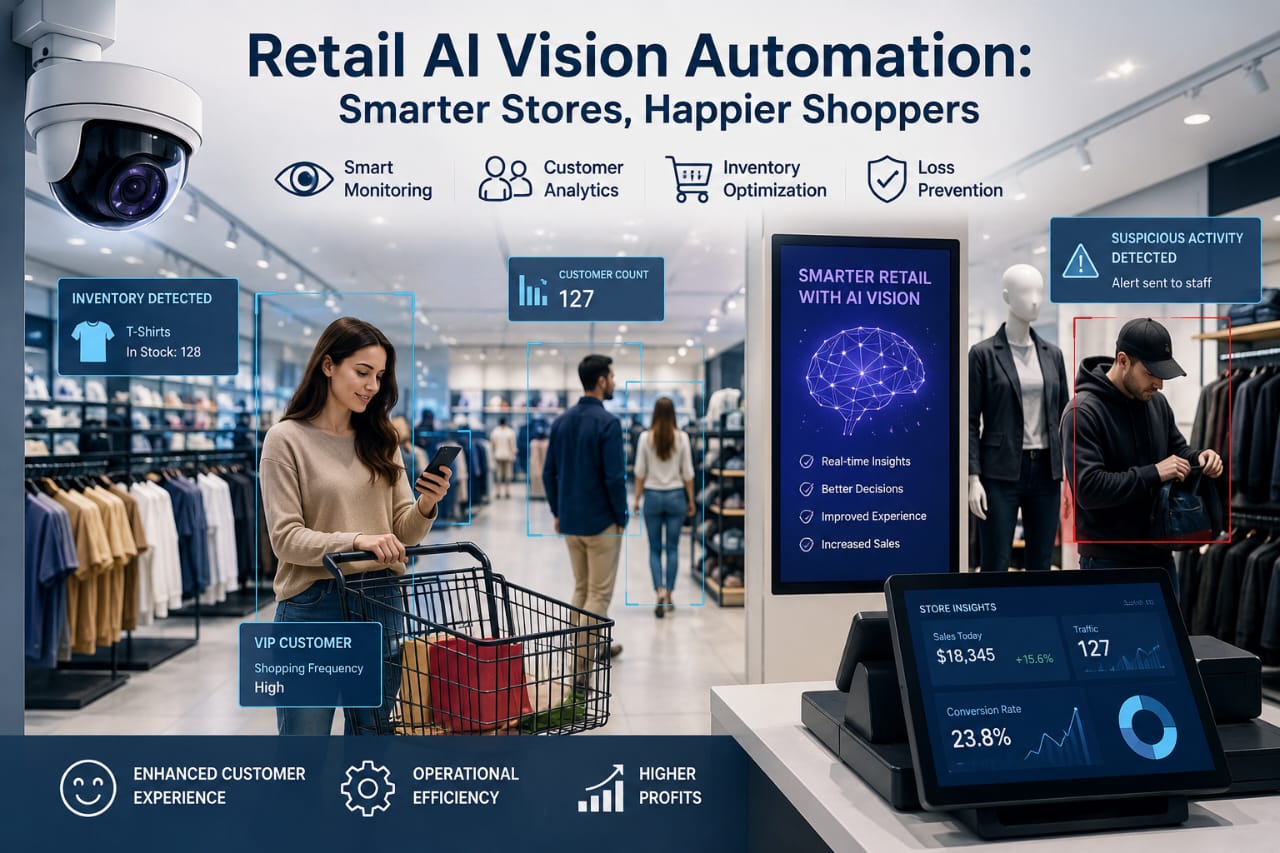
That’s exactly the gap retail AI vision automation is built to close. Instead of treating security cameras as passive recording devices that only matter after something goes wrong. Retail AI vision automation turns that same camera infrastructure into a live, intelligent layer that watches .The entire store in real time. It can spot a shelf gap the moment. It appears, flag a suspicious checkout. Scan before the customer walks out the door, and alert a manager the instant .Line starts to build all without a single person having to watch the footage.
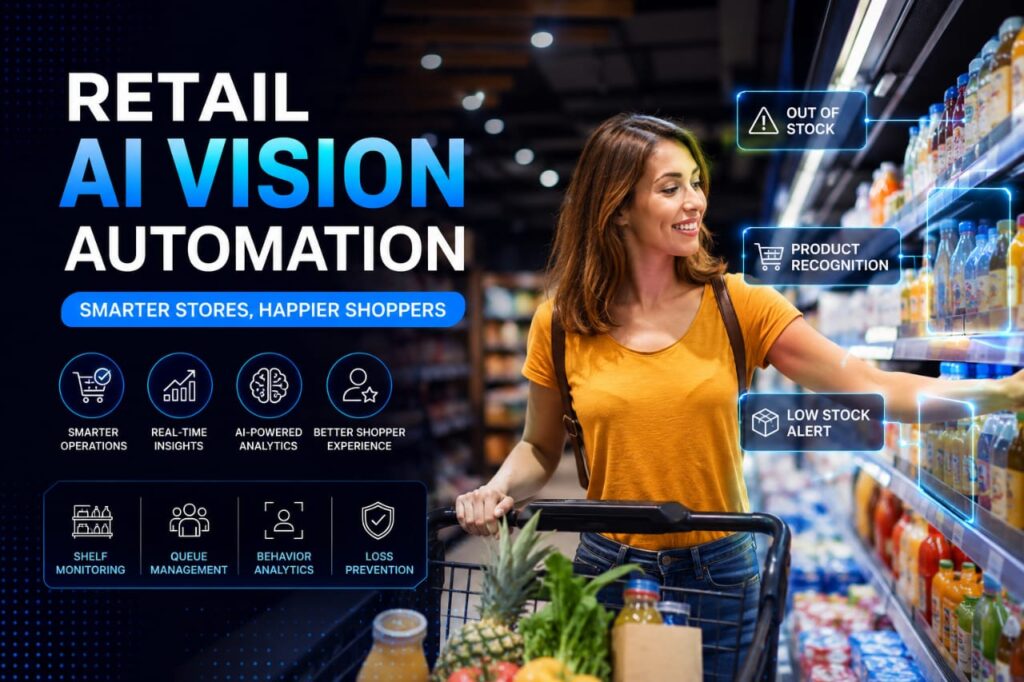
This shift matters because the old model simply can’t keep up with modern retail. Retail AI vision automation gives retailers a way to close that gap using infrastructure they often already own.
A great retail experience happens when everything works behind the scenes. Computer vision systems ensure shelves stay stocked and lines stay short without the shopper ever noticing the technology.”
How Retail Computer Vision Systems
Retail AI vision automation is the use of computer vision Artificial intelligence layered on top of a store’s existing camera infrastructure to automatically. Monitor shelves, checkout lanes, and shopper behavior without needing a human to watch every frame. Instead of cameras that simply record footage for later review, vision .AI systems interpret what they see in real time and trigger an action. an alert, a restocking task, a fraud flag, or a staffing adjustment.
“Retail computer vision systems are turning passive security cameras into the smartest analysts on the sales floor.”
“The future of brick-and-mortar isn’t just about collecting data; it’s about seeing it. Computer vision gives physical stores the real-time eyes they’ve always needed.”
Visual Recognition in Retail Improves
1. Real-Time Shelf Monitoring via Vision AI
When the system detects a gap say, the best-selling pasta brand sold out three hours ago. Ona busy Friday it sends an instant task to the nearest associate’s handheld device. Instead of waiting for someone to notice during a routine walk. Retailers using this kind of shelf intelligence have reported. Improvements in on-shelf availability in the range of 18–30%, depending on store format and rollout depth.
2. Smarter Loss Prevention with Retail Vision
Traditional loss prevention relies on security staff reviewing hours of footage after a theft has already happened reactive by design. Vision AI flips that script. Data shows that behavioral anomaly detection at self-checkout cuts shrinkage significantly compared to post-event review alone.
3.Shorter Checkout Lines Through Computer Vision
Retail AI vision automation solves this by putting the same cameras used for loss prevention to work as queue-monitoring sensors.
This means real-time floor activity drives staffing decisions, rather than a fixed schedule written days in advance. Retailers don’t need to purchase new hardware the existing camera network simply does double duty. The system continuously tracks how many people are waiting and how long lines are building at each register. The moment a queue crosses a set threshold, it automatically alerts a manager or pings available staff to open another lane. The payoff shows up almost immediately: shorter waits, fewer abandoned carts, and a smoother checkout experience that keeps customers coming back.
4. Automated Planogram and Promotion Compliance
Retail chains invest heavily in planograms carefully designed shelf layouts meant to maximize sales. Vision AI can compare live shelf photos against the master plan and flag misplaced products, incorrect facings, or missing promotional signage with high accuracy, saving field teams from manual audits.
How the Technology Actually Works
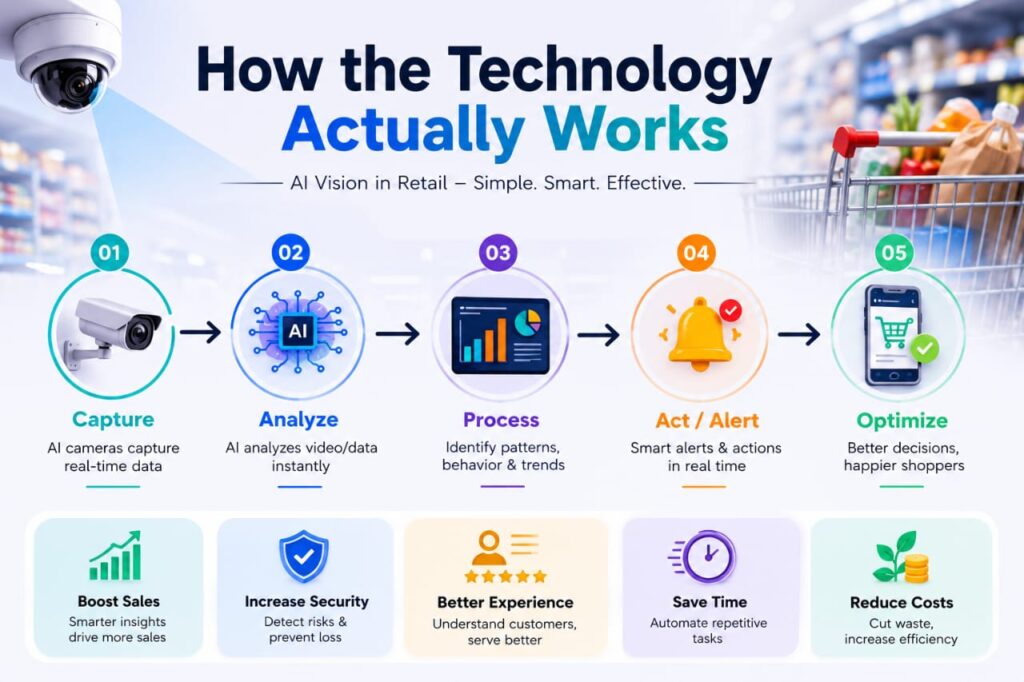
At a basic level, retail AI vision automation follows a simple loop:
Modern deployments increasingly run this analysis on edge devices near the camera itself. which keeps response times low. And reduces how much sensitive video ever needs to leave the store.
In-Store Computer Vision Is Growing So Rapidly
A few forces are driving this shift:
- Retailers have already installed cameras. Most retailers don’t need to rip out infrastructure they can layer vision AI on top of existing CCTV systems
- Edge computing made real-time processing affordable. Analysis that once required expensive cloud pipelines can now run locally and cheaply.
- Labor is stretched thin. Store teams are smaller and busier, so software that flags problems automatically is now a necessity, not a luxury.
- Shrinkage and out-of-stocks are enormous cost centers. Retail shrink alone is estimated to cost the industry tens of billions of dollars a year in the U.S.
Monitoring AI Visual Recognition
1. Real-Time Shelf and Inventory Monitoring
When the system detects a gap say, the best-selling pasta brand sold out three hours ago on a busy Friday it sends an instant task to the nearest associate’s handheld device instead of waiting for someone to notice during a routine walk. Retailers using this kind of shelf intelligence have reported improvements in on-shelf availability in the range of 18–30%, depending on store format and rollout depth.
2. Smarter, Faster Loss Prevention
Traditional loss prevention relies on security staff reviewing hours of footage after a theft has already happened — reactive by design. Vision AI flips that Behavioral anomaly detection at self-checkout has been shown to cut shrinkage significantly compared to post-event review alone.
3. Shorter Checkout Lines and Better Staffing
Long checkout lines are one of the fastest ways to lose a sale and one of the easiest problems to miss until it’s already frustrating customers. Retail AI vision automation solves this by putting the same cameras used for loss prevention to work as queue-monitoring sensors. This means real-time floor activity drives staffing decisions, rather than a fixed schedule written days in advance. Retailers don’t need to purchase new hardware — the existing camera network simply does double duty.
4. Planogram and Promotion Compliance
Retail chains invest heavily in planograms carefully designed shelf layouts meant to maximize sales. Vision AI can compare live shelf photos against the master plan and flag misplaced products, incorrect facings, or missing promotional signage with high accuracy, saving field teams from manual audits.
It Improves the Customer Experience
Better operations don’t just help the bottom line they directly shape how shoppers feel about a store. Consider what changes from a customer’s point of view:
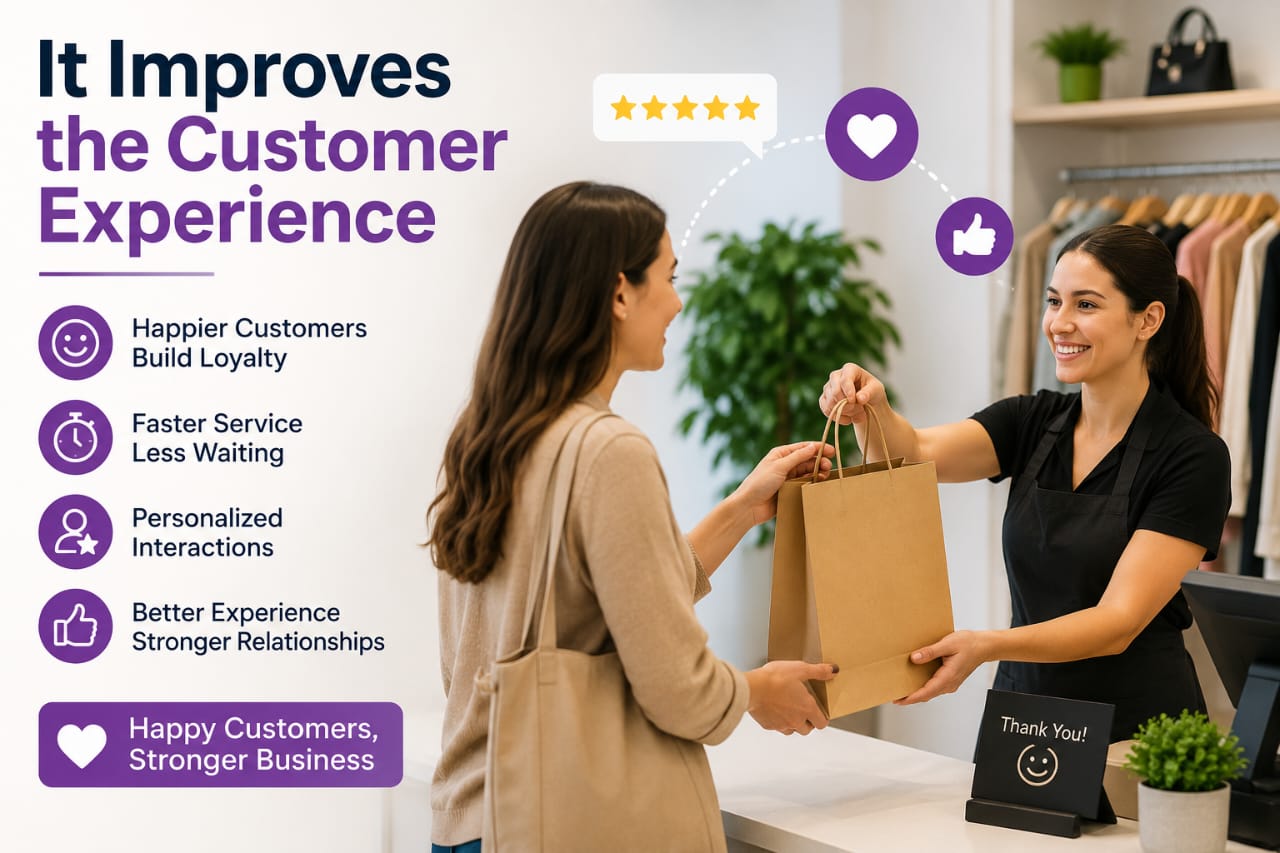
- Products are actually in stock when they go looking for them, instead of a frustrating empty shelf.
- Checkout lines move faster because staffing responds to real demand instead of a fixed schedule.
- Fewer false accusations and awkward stops, since AI-driven loss prevention targets specific behavioral signals rather than broad suspicion.
- Smoother self-checkout, since scanning errors and mismatches get caught and resolved without holding up the whole line.
Getting Started: A Practical Roadmap
If you’re evaluating retail AI vision automation for your own stores, resist the urge to solve everything at once. A focused approach works better:
- Pick one problem inventory gaps, loss prevention, or queue management rather than trying to tackle all three simultaneously.
- Expand gradually into additional use cases and locations once the pilot proves out.
Suggested visual:
An infographic showing a simple store floor plan with icons marking where retailers deploy vision AI shelf cameras flagging an empty slot, a checkout camera detecting a long queue, and an entrance camera tracking foot traffic with a small stat callout box highlighting improvements in shrinkage and shelf availability.
Common Questions
Does this replace store staff?
No. It redirects their attention. Instead of manually walking aisles or reviewing footage, staff get precise, real-time tasks restock aisle 6, open lane 3, review this specific incident so their time goes toward higher-value work.
Is it a privacy concern for shoppers?
Reputable systems are built with privacy safeguards, including on-device processing and anonymized behavior tracking that doesn’t rely on facial identification. Retailers evaluating vendors should ask directly how footage is stored, processed, and retained.
How fast is the payoff?
Many retailers see measurable results within 6–12 months, with fuller returns as integrations deepen across inventory, loss prevention, and staffing systems.
Ready to see where vision AI could make the biggest impact in your stores?
Start by auditing your current camera setup and picking the one operational headache shrinkage, out-of-stocks, or checkout delays costing you the most today, then build your pilot around solving it.
💡 Final Thoughts
Retail AI vision automation isn’t a futuristic concept anymore it’s a practical layer that turns the cameras retailers already own into one of their most valuable operational tools. From catching an empty shelf before a customer does, to shortening checkout lines, to catching fraud in real time instead of days later, the technology touches nearly every part of the in-store experience.
The retailers seeing the biggest gains right now aren’t necessarily the ones with the biggest budgets they’re the ones who started with a focused pilot and let the results speak for themselves
Aapke text mein external links ko natural tarike se insert kar diya gaya hai. Aap is pure formatted text ko copy karke apne WordPress editor mein paste kar sakte hain. Yoast SEO isko perfectly recognize karega:
External Sources Referenced
- Read more about how technology impacts retail security in the NRF 2026 report on computer vision.
- For detailed industry growth numbers, see the complete Computer Vision AI in Retail Market Report.