
Introduction
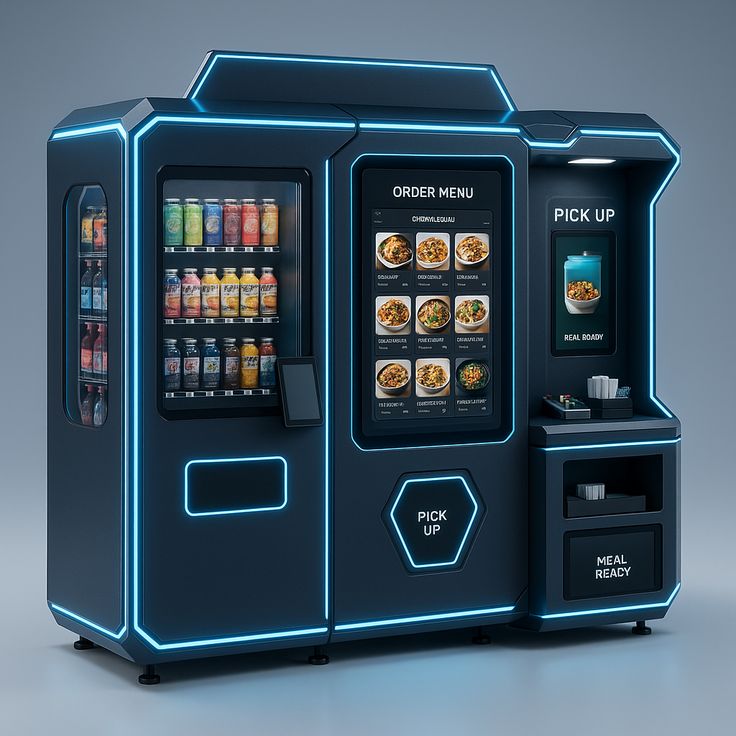
The vending machine sector, which used to be perceived as the less sophisticated segment of retail, is currently experiencing a quiet revolution powered by artificial intelligence. Modern AI vending machines do not resemble primitive coin-operated vending booths that sell snacks and beverages. Today, they are smart retail devices, complete with computer vision technology, cashless payments, inventory control, and predictive analytics. This article explores how AI vending machines work, their costs, benefits, risks, and how to evaluate if they fit your financial goals..
Why AI Vending Machines Are Gaining Popularity Among Investors
Several converging trends are driving interest in this niche, and understanding them helps explain why investors are paying closer attention.
Rising Demand for Contactless and Automated Retail
Consumer behavior has evolved drastically to become convenience-oriented and automated. Driven by the demand for quick self-service, intelligent vending machines are rapidly popping up in workplaces, gyms, and transit hubs.
Lower Long-Term Labor Costs
One of the most appealing factors about AI vending machines is the decreased need for human labor. In conventional retail, human labor is required for checkout, replenishment, and stock control. This requirement is greatly reduced with AI vending machines and can result in a reduction of operational costs.
Data-Driven Decision Making
AI vending machines gather sales data and consumer behavioral data constantly. Consequently, this enables managers to make better decisions regarding product offerings, pricing, and locations. In fact, such an advantage can increase profitability considerably when compared to conventional guessing techniques.
Scalability
Remote software allows operators to manage all machines instantly without traveling between sites. Remote software allows operators to manage all machines instantly without traveling between sites.
What Are AI Vending Machines?

The AI vending machine is a futuristic machine that is based on the application of advanced technologies in order to enhance almost all aspects of the selling process. These machines differ from traditional vending units that need manual restocking and basic functioning as a machine because an AI vending machine relies on several key technologies.Computer vision cameras that allow recognizing products as the customer picks them up, like those applied in convenience stores without cashiers; inventory tracking sensors and systems; cashless payments through credit cards, mobile wallets, and QR-code payments; cloud dashboards allowing operators to manage sales trend analysis, status of their machines, and restocking from any smartphone.
Understanding the Investment Models
Direct investment involves buying and managing machines yourself for maximum profit but requires high involvement. Alternatively, equity investment in vending tech startups offers high potential returns with zero operational control, resembling traditional venture capital.
Costs Involved in AI Vending Machine Investment
The upfront hardware cost for a smart AI-enabled vending machine typically ranges significantly higher than a traditional machine, since it includes cameras, sensors, payment terminals, and connectivity hardware. Software and subscription fees are often required for the cloud dashboard, inventory analytics, and AI recognition systems, usually billed monthly or annually per machine. Location and placement costs may include rent, revenue-sharing agreements with property owners, or commission fees paid to secure high-traffic spots. Inventory and restocking costs cover the ongoing purchase of products to sell, which fluctuates based on machine performance and product turnover.
Potential Returns: What to Realistically Expect
Return on investment for AI vending machines varies widely based on location, product margins, foot traffic, and operational efficiency.High-traffic locations like corporate offices, hospitals, and transit hubs generate significantly better returns. In addition, profit margins depend heavily on product selection. Higher-margin items, such as specialty snacks or electronics accessories, typically outperform basic candy. Consequently, payback periods range from under a year in strong spots to several years in weaker ones. Therefore, location due diligence is the single most important factor for profitability.
Investors should treat any guaranteed or fixed high-return claims with skepticism, as actual performance is influenced by many variable factors outside a vendor’s control.
Investment Models Comparison
| Investment Model | Involvement Level | Control Over Operations | Risk Level | Best Suited For |
|---|---|---|---|---|
| Direct Ownership & Operation | High | Full control | Moderate to High | Hands-on entrepreneurs |
| Franchise / Managed Vending Program | Low to Medium | Shared with provider | Moderate | Semi-passive investors |
| Equity in Vending Tech Startups | None (financial only) | No operational control | High | Venture-style investors |
| Vending Machine Fund / Syndicate | Very Low | Minimal | Moderate | Passive, diversified investors |
Key Risks to Consider
No investment is without risk, and AI vending machines carry a specific set of challenges that potential investors should weigh carefully. Technology risk exists because AI recognition systems, while improving, are not always perfectly accurate and can occasionally misidentify products, leading to billing disputes or customer dissatisfaction. Maintenance complexity is higher than traditional machines since more components, including cameras and sensors, mean more potential points of failure, often requiring specialized technicians rather than general handymen. Location dependency risk means a machine’s success is overwhelmingly tied to foot traffic and location quality, and a poor location can result in a machine that barely covers its own costs.
How to Evaluate an AI Vending Machine Investment Opportunity
Before investing, systematically evaluate the opportunity. First, verify the vendor or franchise track record. Check how long they have operated, their active machine count, and ask for investor references. Finally, assess the location strategy in detail. Ask how they source, vet, and secure locations, as this is the single biggest driver of your returns. Also, understand the full fee structure, including revenue-sharing, software subscriptions, and hidden charges. Request real, audited or verifiable sales data rather than projected estimates, and be cautious of companies unwilling to share actual performance numbers. Assess location strategy in detail, asking specifically how locations are sourced, vetted, and secured, since this is often the single biggest driver of returns. Understand the full fee structure, including any revenue-sharing arrangements, software subscription costs, and hidden charges that could erode profitability.
Is Investing in AI Vending Machines Right for You?
This investment model suits individuals seeking a semi-passive income stream with some operational involvement.It works well if you enjoy hands-on due diligence for locations. In addition, it suits those who have capital to diversify across multiple machines and like tech-driven retail. Conversely, it fits poorly if you want a fully hands-off investment. Furthermore, you should avoid it if you dislike equipment maintenance or cannot tolerate unpredictable returns.
Frequently Asked Questions (FAQs)
1. How much does it cost to invest in an AI vending machine?
Costs vary widely depending on the hardware, software subscriptions, and location fees involved, but AI-enabled machines generally cost more upfront than traditional vending machines due to the added sensors, cameras, and connectivity technology.
2. Are AI vending machines a passive income source?
They can be semi-passive, especially when working with a managed program, but they typically still require oversight for restocking, maintenance, and location management unless fully outsourced to an operator.
3. What is the average payback period for an AI vending machine?
Payback periods depend heavily on location and product margins, ranging from under a year in high-traffic spots to several years in weaker locations.
Conclusion:
AI vending machines represent a genuinely interesting evolution in automated retail, combining traditional vending economics with modern data and automation technology. For the right investor, in the right location, with the right vendor partnership, they can offer a scalable and reasonably profitable business opportunity. However, this is not a guaranteed or purely passive investment. Success depends heavily on location quality, vendor reliability, product strategy, and realistic financial planning rather than marketing promises. Anyone considering this space should approach it the way they would any small business investment: with thorough due diligence, conservative financial projections, and a clear understanding of both the technology and the operational responsibilities involved. Treated this way, AI vending machines can be a legitimate addition to a diversified investment portfolio rather than a speculative gamble.